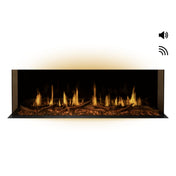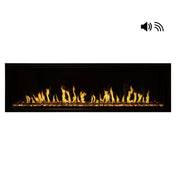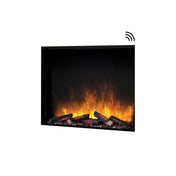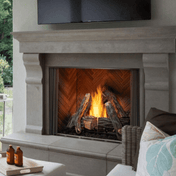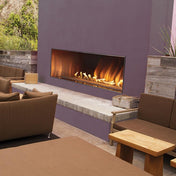

Most of what people believe about fireplaces is about ten years out of date.
If your mental image is a brick chimney, a gas line, and a contractor telling you what you can't have, that was true once. It isn't now. We've spent years fitting these into apartments, rentals, bedrooms, restaurants and houses where the wall was never going to be opened up, and the short version is that almost any room can have a real fireplace today.
So this isn't a gallery of pretty pictures. It's the walk-through we'd give you if you came into the showroom: start at the top, work down by how it installs, then by what it burns, and see what's actually available before you narrow anything. Along the way: what's actually possible now, what each option costs you in effort, and which of the things you've heard turn out not to be true.
You have four fuels to choose from, and the choice is more open than most people expect: electric, vent-free gas or direct vent gas, bioethanol, and water vapor. Three of those four need no chimney at all.
Eight Things People Still Believe About Fireplaces That Aren't True
Start here, because most of the constraints people plan around have already been engineered away. Each of these was a fair assumption once.
1. "You need a chimney"
Then: a fireplace meant combustion, and combustion meant a flue running up through the house.
Now: electric produces no combustion at all, so there is nothing to vent. Vent-free gas burns clean enough to stay in the room. Direct vent sends exhaust straight out through an exterior wall, no vertical chimney required. Ethanol and water vapor vent nothing either. If you want the whole picture on this, we wrote a full guide to having a fireplace without a chimney.
2. "Electric fireplaces look fake"
Then: an orange bulb behind a rotating foil reflector. It fooled nobody.
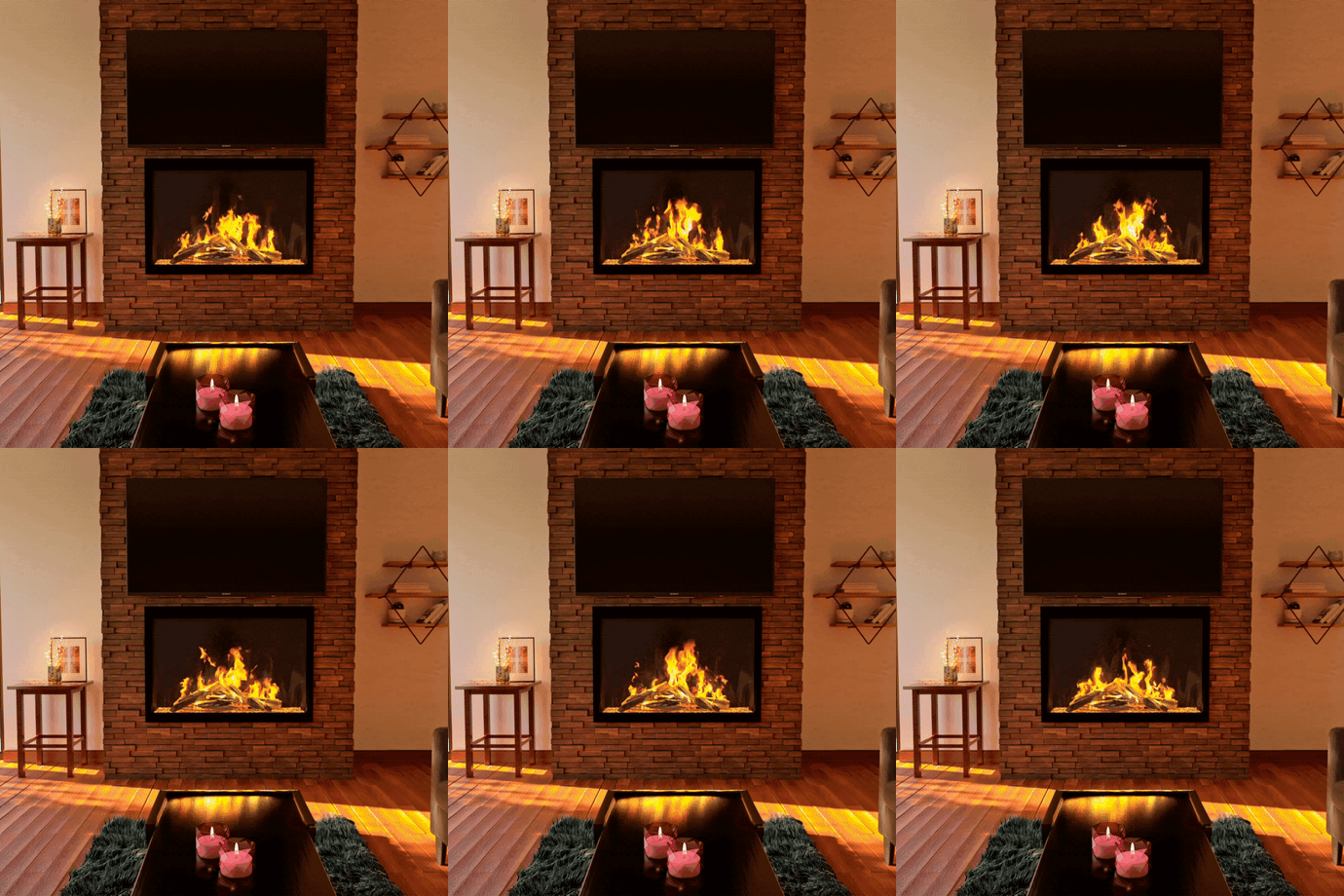
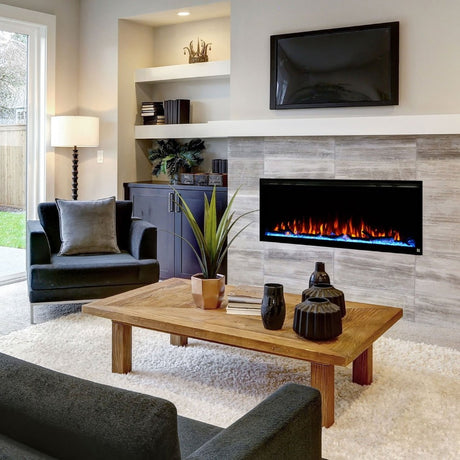
Now: the good ones project a flame image onto a three-dimensional log bed, so the flame has depth and sits behind and around the logs instead of in front of them. Modern Flames calls its version HELIOVISION. Water vapor goes further and produces flame from actual mist lit from below, which reads as real from a few feet away because it physically is vapor moving. We compared the technologies in virtual versus LCD electric fireplaces and ranked the best of them in the most realistic electric fireplace inserts guide.
The related worry is whether an electric fireplace reads as cheap in a nice room. We took that question seriously enough to write a whole article on whether electric fireplaces are tacky.
3. "You can't hang a TV above a fireplace"
Then: heat rose off an open firebox straight into whatever sat above it, and electronics did not survive that.
Now: there are two clean routes. Most built-in electric models push their heat forward through a front-facing outlet rather than up the wall face, which is why the electric route is the common one. If you want a real gas or wood flame instead, the trade solution is a projecting mantel shelf that catches rising heat and pushes it out into the room before it reaches the screen. A floating beam mantel or a slim floating shelf does that job and looks deliberate rather than defensive.

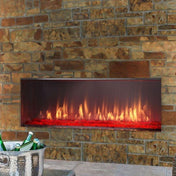
Either way, the clearance to the screen is set by the model, not by the category. Read the manual for the unit you pick and follow its stated figure rather than a rule of thumb. The photo below shows the arrangement on a vent-free outdoor gas fireplace, timber beam doing the work under a mounted screen.

4. "A fireplace means masonry, brick and big clearances"
Then: the surround had to be non-combustible for a foot in every direction, which is why every older fireplace is brick or stone whether the room wanted it or not.
Now: zero-clearance units are built to sit flush against ordinary framing. That opens the surround up to marble, sintered stone, large-format porcelain, micro-concrete, lime plaster, vertical wood slats, or a wall painted a color you actually like. The fireplace stops dictating the finish.
5. "Electric doesn't really heat anything"
Then: a token 1,500-watt element that took the chill off a small bedroom and nothing more.
Now: plenty of built-in models are rated for a main living space, and several of the larger ones roughly double their output when they're hardwired to 240 volts instead of plugged into a standard outlet. Heat output and coverage vary a lot between models, so check the figure on the one you're considering. What has not changed is the useful part: the flame runs independently of the heat, so it looks right in July.
6. "A real flame means a gas line"
Then: if you wanted actual fire, you needed a utility connection and a permit.
Now: bioethanol burns a genuine flame with no gas line, no flue and no electrical work. You fill it by hand and light it. That makes it the one route to real fire in a rented apartment or a room that cannot be altered. It's a fuel with real rules, which we cover in what an ethanol fireplace actually is and whether ethanol fireplaces are safe.
7. "You get one viewing side"
Then: a fireplace was a hole in one wall, facing one room.
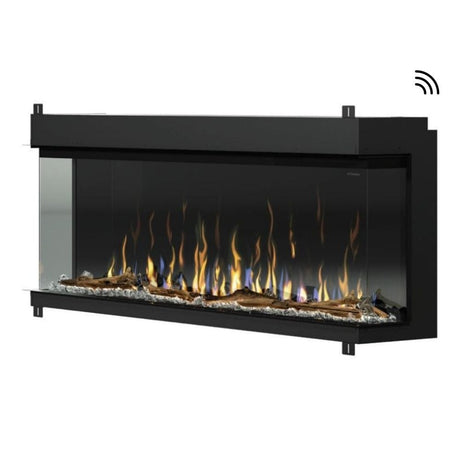
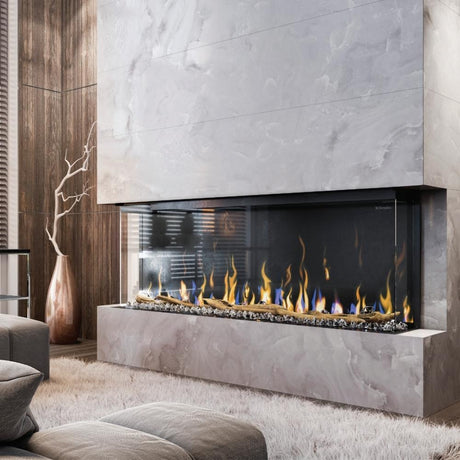
Now: see-through models serve two rooms at once, and three-sided units come in bay, peninsula and corner configurations so the flame is visible from most of an open plan. This is the single biggest change in what a fireplace can do to a floor plan, and it's the reason so much of this article is about layout rather than decoration.
8. "It's a switch on the wall"
Then: a wall switch, or a remote you lost.
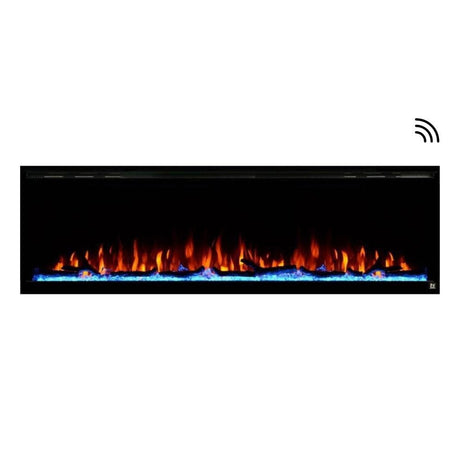
Now: most built-in electric models we sell are smart. You run them from an app, and many pair with Amazon Alexa or Google Home, so the fireplace joins the same scene as the lights. Flame color, flame speed, ember bed and heat are separate controls rather than one on-off. Some receive firmware updates over the air, which means the unit you buy this year can gain features next year. It's the least visible change on this list and the one people notice most once they live with it.
Modern Fireplace Wall Ideas
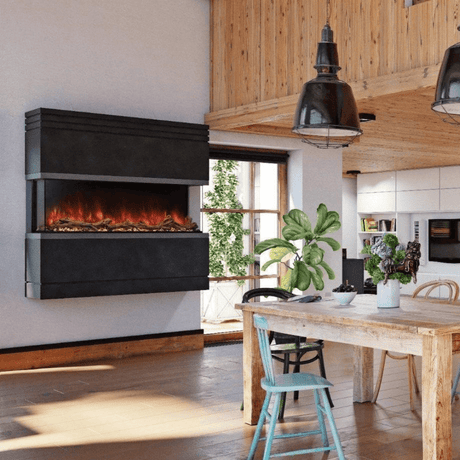
The wall does more work than the fireplace does. A linear unit set into plain painted drywall reads as a builder feature. The same unit set into a full-height slab of stone reads as architecture, and the appliance underneath is identical.
Four surrounds we keep coming back to:
- Full-height stone or porcelain. A single large-format slab running floor to ceiling, with the fireplace opening cut into it. Fewer grout lines is the whole trick.
- Vertical wood slats. Warmth and rhythm, and they hide the transition where the fireplace box meets the wall.
- Micro-concrete or lime plaster. A matte, slightly textured monolith. This is where texture does the work instead of pattern.
- One saturated color. Charcoal, deep green, oxblood. The cheapest option here by a wide margin and often the most confident.
The two below show how much the surround changes the result: the Orion Slim set into a full-height textured wall, and the Napoleon Elevation against a single slab of black marble. If you want to go deeper on surrounds specifically, we have a companion piece on electric fireplace wall ideas and one on fireplace design mistakes worth avoiding.


A mantel is still allowed. A shelf is not a traditional gesture by itself, it depends entirely on its profile. A cast stone surround with flat planes and a chamfered shoulder reads modern because there's no applied ornament on it, and the stone texture is the point. The same is true of a plain timber beam. What dates a mantel is carving, corbels and fluting, not the material it's made from.

Mantels: Decoration, and a Heat Shield
A mantel is doing one of two jobs, and it's worth knowing which one you're buying.
The decorative job
A shelf or surround gives a flat wall structure and a place to put things. Whether it reads modern is entirely about the profile: flat planes, a chamfered edge and no applied ornament, in any material you like. A cast stone surround and a plain timber beam are both modern; carving, corbels and fluting are what date a mantel. Browse modern mantels or the wider mantel range.
The heat shield job
This is the one people don't know about. A mantel shelf that projects from the wall catches heat rising off the firebox and pushes it out into the room instead of straight up the wall face. That's what makes a TV above a real gas or wood fire workable, and it's why the shelf on an older fireplace was never purely decorative.
If the shelf is doing that job it has to survive the heat, which is what a non-combustible rating means. Our own matte black floating metal shelf is built for exactly this, and the industrial black floating shelf is the same idea with more presence. A flat sawn beam gives you the timber look with a non-combustible core. The full range is in floating mantel shelves.
Two things to get right: the shelf has to project far enough to deflect anything, and the clearance between firebox, shelf and screen is set by the fireplace manufacturer, not by the shelf. Read the manual for the unit and build to its figure.
Modern Fireplace Designs by Format
Format is the decision that shapes the room. Fuel comes after it, because most formats are available in more than one fuel.
Linear
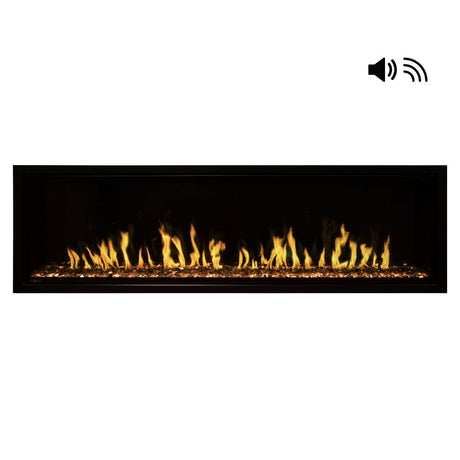
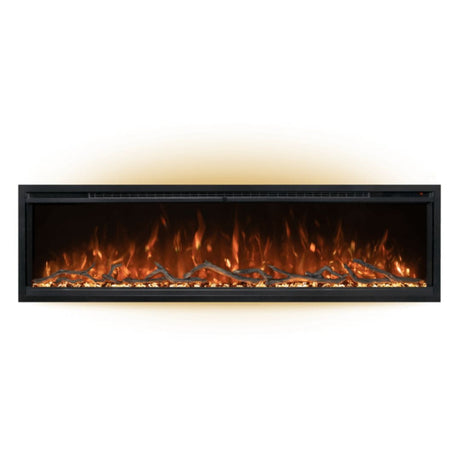
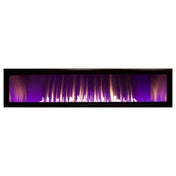
The default modern format, and for good reason: a long, low band of flame suits the proportions of a contemporary room and sits comfortably under a mounted TV. Widths run from modest to genuinely architectural.
The EcoSmart Motion runs long and low enough to read as architecture rather than an appliance, which is the whole point of the format. For the same shape carrying a real gas flame, the Empire Boulevard does it vent-free, so there's no flue to build.


Two-sided and see-through
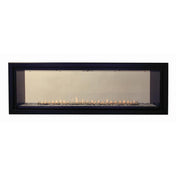
Set into the wall between two rooms, a see-through fireplace finishes both of them and keeps the sightline open. It's the highest-impact thing you can do to an open plan without moving a wall.
The Modern Flames Nova Clear does this electrically, which keeps the install simple enough that a see-through fireplace stops being a major build. If you want a real gas flame through a divider instead, the Majestic Echelon II is sealed direct vent, so neither room gives up its air to it.


Three-sided: bay, peninsula and corner
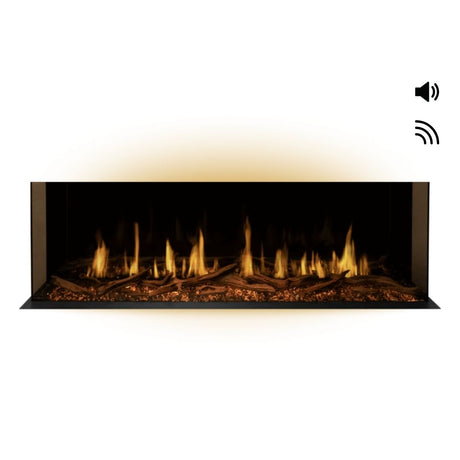
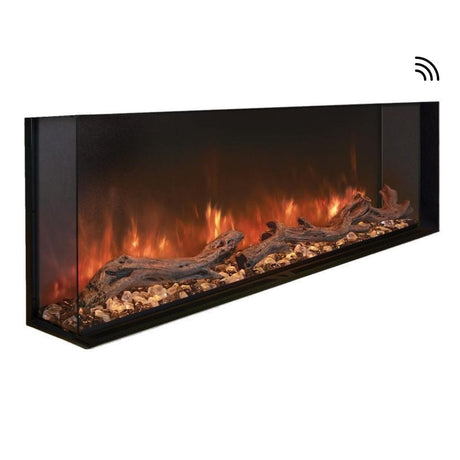
Three panes of glass, so the flame is visible from most of the room. A bay configuration projects into the space, a peninsula runs out from a wall like a promontory, and a corner version turns an awkward junction into the focal point. Many of these units ship with the trim to do all three, so the configuration is a decision you make on site rather than at order time.
The Modern Flames Orion Multi is the one we specify most often, because it ships with the trim for all three configurations and the decision can wait until the framing is up. The Dimplex Ignite XL Bold is the wider, more theatrical take on the same idea.


Traditional shape, modern face
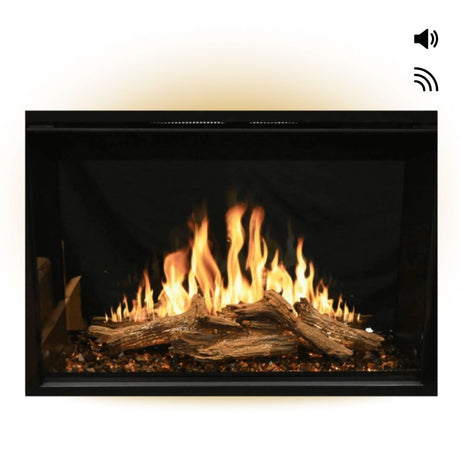
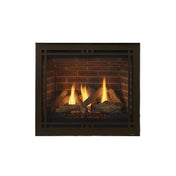
Worth saying plainly, because people assume the two are opposites: you can have a deep, single-sided firebox with a log set and still have it read modern. What makes it modern is the face. A clean black frame with no trim, no louvers and no decorative surround puts the fire in a plain rectangle, and a plain rectangle is a modern gesture whatever is burning inside it.
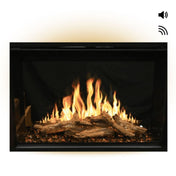
The Orion Traditional is the electric version of this idea, and the Majestic Meridian is the gas one. Both are the right answer when you want a fireplace that looks like a fireplace, in a room that doesn't.


Freestanding and tabletop
Nothing to build, nothing to open up, and it moves with you. Freestanding units stand on the floor and need no wall at all, which makes them the realistic option for a rental or a room that can't be altered. The Eco-Feu Vision II does this with a real ethanol flame, and the Eco-Feu Paramount gives you a three-sided view as a piece of furniture, which is normally the expensive end of a build.

Smaller again, tabletop pieces like the Anywhere Lexington and the Anywhere Oasis put a real flame on a dining table or a patio ledge with no installation of any kind.


Fire tables
Furniture and fire in one object. A concrete fire table anchors a seating group the way a fireplace anchors a wall, and it doesn't commit the room to anything. The EcoSmart Martini is offered in ethanol or gas and works indoors or out.

Choosing a Fuel: Electric, Gas, Ethanol or Water Vapor
Format decides how the room feels. Fuel decides what the installation costs you in work, and what the fire actually is.
Electric is the most flexible, and the reason most of the designs above are achievable at all. No venting, no gas line, no chimney, and many models run off a standard outlet. The detail that matters more than people expect is that the flame runs independently of the heat, so the fireplace still earns its wall in July. It also comes in the widest range of shapes, which is why it dominates the linear and multi-sided formats above.
Gas gives you a real flame and real heat, and asks for a gas line in return. The split worth understanding is vent-free against direct vent. Vent-free burns into the room and needs no flue at all, which is why it can go where nothing else can, and also why some jurisdictions restrict it. Direct vent seals the firebox behind fixed glass, draws combustion air from outside and pushes exhaust back out through the same wall. Indoor air stays untouched, and the flame tends to look fuller for burning in its own controlled atmosphere.
Ethanol burns a real flame with no venting, no utility connection and no electrical work. You fill it by hand and light it. That hand-filling is the whole trade: it makes ethanol the only route to real fire in a rented apartment, and it's also the one fuel that asks something of you every time you use it.
Water vapor makes a flame out of mist and light. It's cool to the touch and vents nothing, so it goes places fire simply cannot: a child's room, a commercial lobby, a wall you would rather not put heat against. The Dimplex Opti-Myst is the one we install most, and it's the one that makes people stop and look twice.

Where the Fireplace Should Go
Most living room fireplace decisions are really layout decisions. The fireplace sets the focal point and the furniture follows it, so it's worth deciding which wall earns it before you choose a model.
The long wall is the default, and usually right. A linear unit centered on the longest uninterrupted wall gives you a wide flame and a natural seating arc. It's also the easiest wall to run power or gas to.
A dividing wall gives you two rooms for one fireplace. Where a living room opens into a dining area or hallway, a see-through unit set between them finishes both and keeps the light moving.
A corner rescues a room with no spare wall. Two-sided corner models turn an awkward junction into the focal point instead of dead space, which matters most in smaller rooms where the long walls already belong to a sofa and a door.
Bedrooms take the same logic at a smaller scale, and we have a piece on bedroom fireplaces if that's the room in question. Outdoors is its own problem, covered in modern outdoor fireplace ideas.
Whatever the wall: mark the fireplace and the furniture footprint on the floor with tape before you order anything. It's a five-minute check that catches expensive mistakes.

How Do You Choose a Modern Fireplace?
Once you've settled the look, three practical questions narrow it fast.
How deep is the wall?
Wall depth decides more designs than budget does. Standard 2x4 framing takes a slim recessed unit, and there are more of those than people expect: we listed them in three types of electric fireplace that fit a 2x4 wall. A 2x6 wall opens up deeper models with more dimensional flames. If the wall can't be opened at all, a wall-mounted unit or a mantel package sits on the surface with no framing.
How much building work is realistic?
Built-in installations look the most finished and need framing, finish materials and usually an electrician. Wall-mounted models and mantel packages get close to the same effect with no construction. Freestanding and tabletop pieces need nothing at all. Being realistic about this at the start is what keeps a project from stalling halfway. If you want to see the built-in process before deciding, we filmed a recessed electric fireplace install.
Does it need to do a job, or just look good?
If it's the primary heat for the room, that rules out water vapor and pushes you toward gas or a larger hardwired electric unit. If it's atmosphere, the field is wide open and the flame quality matters more than the output. Most people are in the second group and buy as though they're in the first.
What to Confirm Before You Install
Five things worth checking before anything is ordered, because each is expensive to discover late.
- Power or fuel at the right spot. A recessed electric unit usually needs power inside the wall cavity, and a hardwired model needs a dedicated circuit. Gas needs a line and an accessible shutoff.
- The rough opening, not the fireplace. Framing dimensions differ from appliance dimensions, and the manual gives both. Build to the framing figure.
- Clearances to anything combustible. Mantels, shelving, TVs and surrounding materials all have stated minimum distances, and they vary by model rather than by category.
- Whether the finish can run to the edge. Some models are designed for tile or stone to meet the opening, others need a trim kit. This changes the look substantially.
- Service access after the wall is closed. Check how the unit is reached for maintenance before the finish materials go on.
Start With the Shape of the Room
If you take one thing from this: decide the format and the wall first, then pick the fuel that makes that format possible. Doing it the other way round is how people end up with a fireplace that fits the budget and not the room.
Browse every modern fireplace we carry, across all four fuels and every format above.
Keep Reading
Wherever you got stuck above, we've probably written the long version of it.
Still deciding on a fuel
- The ultimate guide to electric fireplaces
- Gas fireplaces: types, costs, safety and top-rated models
- Ventless gas fireplaces: complete buying guide and the direct vent guide
- Gas versus electric: how to choose
- What is an ethanol fireplace?, plus how safe bio-ethanol fuel is and the regulations
- The water vapor fireplace buying guide
If flame realism is the sticking point
- The most realistic electric fireplace inserts
- Virtual versus LCD electric fireplaces
- Are electric fireplaces tacky?
Planning the install
- How to have a fireplace without a chimney
- Three types of electric fireplace that fit a 2x4 wall
- How to install a built-in electric fireplace
- Electric fireplace FAQ
More rooms, more ideas
- Electric fireplace wall ideas
- Modern luxury linear fireplaces
- Modern fireplaces for bedrooms
- Modern outdoor fireplace ideas
- Creative water vapor installations
- Eco-friendly minimalist fireplaces and fireplaces in kitchens
- Fireplace design mistakes worth avoiding
Before you buy
- Our expert review of Modern Flames, the brand that appears most often above
- Orion versus Dimplex Ignite XL Bold, two of the three-sided units head to head
- The best electric fireplaces to buy this year