

Most "best electric fireplace" lists are assembled from spec sheets by someone who has never sold one. This one is built from what our customers actually bought over the last twelve months, cross-checked against what we know about how each unit installs and how convincing the flame really looks in a room.
Everything below is in stock and currently sold on this site. If you want to browse rather than read, the full range is in electric fireplaces.
The Short List
| If you want | Buy | Why |
|---|---|---|
| The most realistic flame | Modern Flames Orion series | Plays a recording of a real fire on a screen rather than synthesizing one with light |
| The best all-rounder | Dimplex Ignite Evolve | Clean linear face, recesses into a 2x6 wall, and it is rated for covered outdoor use too |
| Flame from three sides | Modern Flames Orion Multi | The one to use at the end of an island, a peninsula or a half-wall |
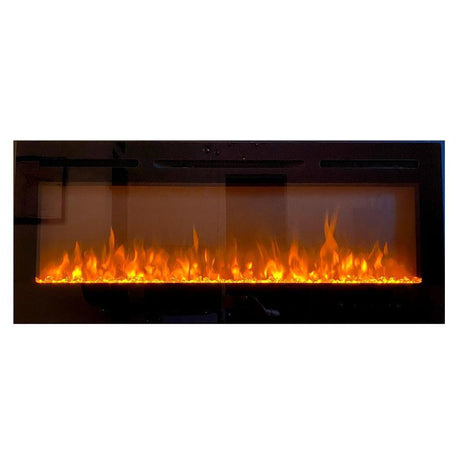
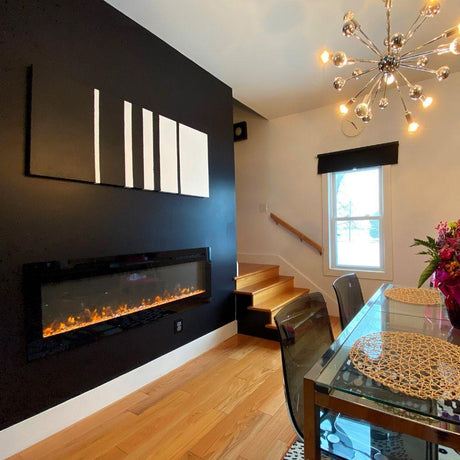
| Best value linear | Touchstone Sideline | The volume seller, in more widths than anything else we carry |
| An existing masonry opening | Modern Flames Redstone | Purpose-built insert that slides into a fireplace that no longer works |
| Logs rather than a linear face | Dimplex Revillusion | Traditional firebox with no glass across the front, so it reads as an open hearth |
| The most convincing flame up close, and no heat | Dimplex Opti-Myst | Water vapor rather than light, so it holds up at arm's length and produces no warmth at all |
| No framing or construction | SimpliFire Allusion Slim | Hangs on the wall like a television, and can be recessed later if you change your mind |
| Nothing installed at all | Sierra Flame cast iron stove | Freestanding, plugs in, and moves with you |
| Flame visible from two rooms | Napoleon CLEARion Elite | Double sided, with independent heat to each room and an optional privacy screen |
| A covered patio or porch | Modern Flames Landscape Pro | Outdoor rated with no conditions beyond the cover, in single and three-sided versions |
First, the Thing That Decides Everything: How the Flame Is Made
There are two fundamentally different technologies sold under the same words, and the difference is larger than any spec on the box.

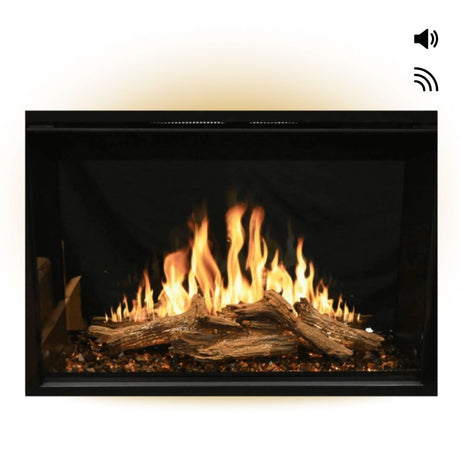
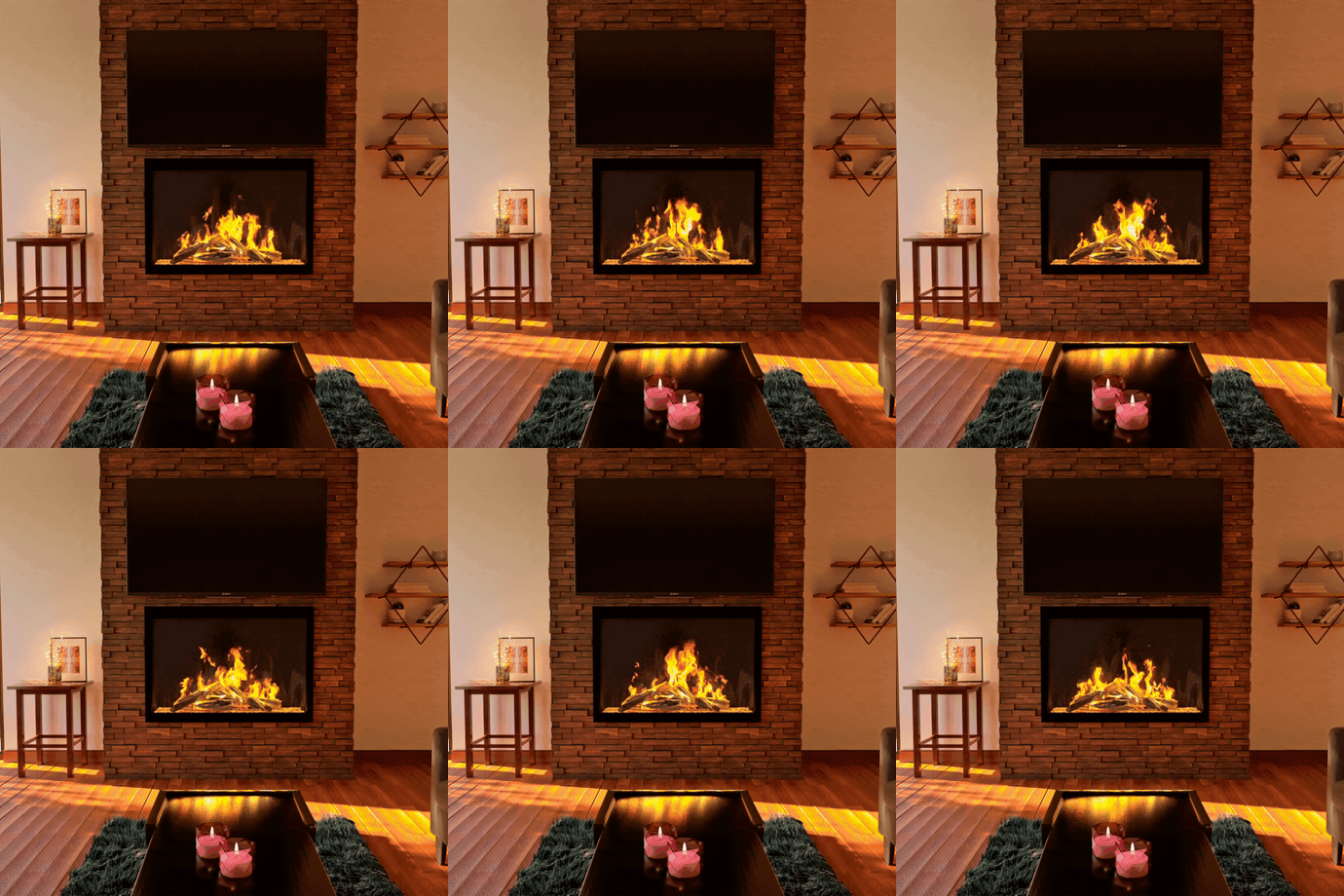
A virtual flame is a recording of an actual fire, played on a screen behind the glass. Because it is footage of real combustion, the movement is irregular in the way fire actually is, and it is the reason people stop and look twice. Modern Flames' Orion series works this way.
An LED flame effect synthesizes a flame out of light, usually by bouncing LEDs off a moving reflector. There is no image of fire anywhere in the system. Modern units do this well and give you something a real fire cannot, which is full color control, but from a few feet away it reads as a lighting effect rather than as fire.
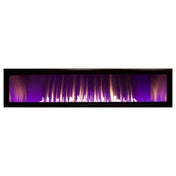
The tell is the flame itself, not the color menu. Ignore color: virtual, LED and water vapor units all offer multi-color flames, so a purple flame tells you nothing about the technology behind it.
Look instead at what the flame looks like when it is set to ordinary orange. A virtual flame looks like fire, because it is fire, filmed: the movement is irregular, the brightness varies, and the shape never quite repeats. An LED flame usually looks like a drawing of a flame. The shape is cleaner than real fire ever is, and it cycles. Once you have seen the two side by side you will not confuse them again, and it is the single best reason to look at a fireplace in person or on video rather than in a still photograph.
Neither is wrong. They are different purchases, and the price gap between them is significant.
A third category, water vapor, is neither. It makes its flame from ultrasonic mist lit from below, so what you are looking at is a real three-dimensional plume rather than an image of one. It is the most convincing of the three at arm's length, and it produces no heat at all, which is why it turns up in reception areas, bedrooms and any room that is warm enough already.
The trade-offs are that it needs water and it costs more than an LED unit of the same size. The Dimplex Opti-Myst range answers the first with a plumb kit that connects it to a water line so it refills itself. See water vapor fireplaces for the range.
Most Realistic: Modern Flames Orion

The Orion series is what we recommend when realism is the priority and the budget allows, and it is the range our customers spend more on than any other by a wide margin.
All three share the same virtual flame platform, Bluetooth speakers with crackling soundscapes, and over-the-air flame updates, which means the fireplace gains new flame styles after it is installed rather than shipping with a fixed set. Pick by shape:
- The Orion Traditional is a conventional firebox shape and the one to use when replacing an old fireplace. Indoor only.
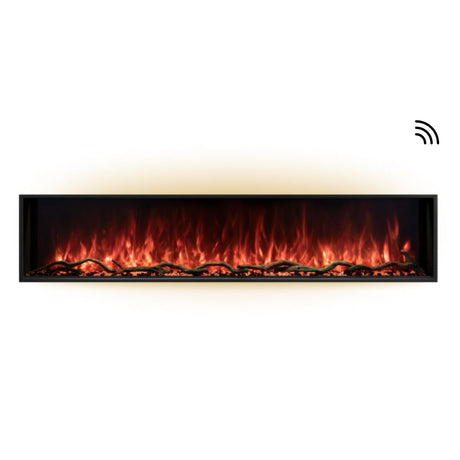
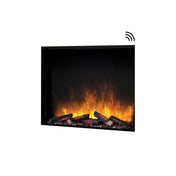
- The Orion Slim is the single-sided linear version, built for a 2x6 wall.
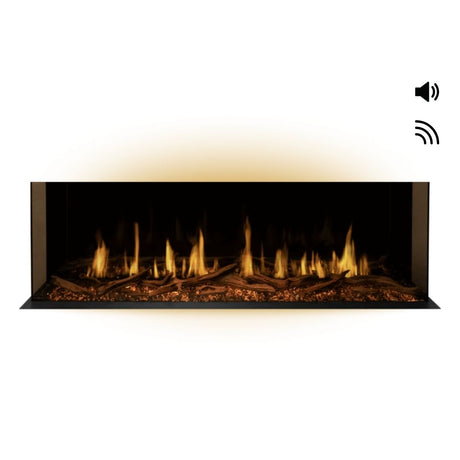
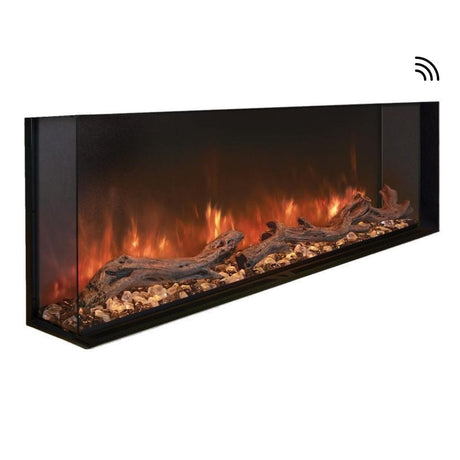
- The Orion Multi shows flame from three sides and is the widest unit we sell.
One version note worth having before you order. The Slim and the Multi are approved for outdoor installation in their Version 2 form, under a patio cover and built in rather than wall mounted. The Traditional is not outdoor rated in either version. We go through the whole range in our Modern Flames series review.
Best All-Rounder: Dimplex Ignite Evolve

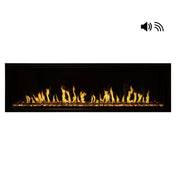
If you want one recommendation without conditions, this is it. The Ignite Evolve is a clean linear face that recesses fully into a standard 2x6 wall, comes in a wide spread of widths, and gives you adjustable flame color, brightness and speed with optional crackling audio.
Two things separate it from the rest of the linear market. It is certified for covered outdoor installation as well as indoor use, and Dimplex is unusually direct about the trade-off: five-year warranty indoors, one year outdoors. The Ignite Evolve is also one of the few units that will suit a covered patio and an interior wall equally, which matters if you are doing both.
Best Three-Sided

A three-sided unit shows flame from the front and both ends, which is what you want at the end of an island, a peninsula, or a half-wall that stops partway across a room.
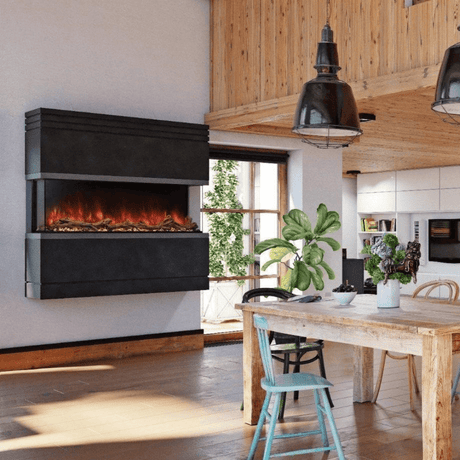
The Orion Multi wins on realism, for the reason covered above: it plays a recording of a real fire rather than synthesizing one from light. It is also the most flexible to install. Built in, it hardwires. But paired with the floating mantel set it wall mounts instead, which means no framing, no drywall work and no electrician, because that kit includes a cord and the fireplace simply plugs into a 120V outlet. That is worth knowing before anyone quotes you for construction.
The Dimplex Ignite XL Bold solves length, because it links multiple units into one continuous run that reaches further than any single fireplace can. It is the one we have specified most often for a long wall.
The SimpliFire Triton does both jobs at once, and it is the most adaptable unit in this section. It links end to end the same way, and on a run of three or more the units in the middle have both ends open, so the line of flame reads as one fireplace rather than a row of boxes. It also installs four different ways from the same box: single-sided, three-sided bay, or two-sided corner opening left or right, with the choice made at installation rather than at checkout. On a renovation where the wall design is still moving, that is worth a lot.
Two Triton details worth knowing early. Its 50-inch size wall mounts on an optional floating mantel kit that ships with a plug-in cord, so it needs no framing and no electrician, the same trick the Orion Multi has. And it is about 12.5 inches deep, needing roughly 13 inches of framing, so it will not fit a 2x4 or a 2x6 wall without building out a chase. Check that before anything else.
The Napoleon Astound FlexMount is the one to pick when the installation is not decided. It is three-sided or open corner, it goes in built-in or wall mounted, and it is rated for covered outdoor use as well, which is an unusual amount of latitude in a single unit. If you are choosing a fireplace before the room is finished, it keeps more doors open than anything else here.
For a wall-mounted three-sided unit that needs no framing at all, the Touchstone Chesmont hangs on the surface, and the Napoleon Trivista Primis is the built-in alternative, with the useful trick of converting between one, two and three-sided so the same unit suits a wall, a corner or a peninsula. The rest are in 3-sided electric fireplaces.
Best Double Sided: One Fireplace, Two Rooms
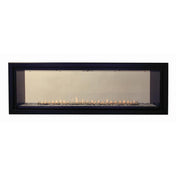
A double sided fireplace, also called see-through, sits in the wall between two spaces and shows flame to both. It is the most useful thing a fireplace can do to a floor plan, because it divides a room without closing it off: the kitchen keeps its sightline to the living room, and both ends get a focal point instead of one getting a blank wall.
It is a small category in electric, and the two worth knowing behave quite differently.
Napoleon CLEARion Elite: the Practical Divider

The CLEARion Elite is a conventional firebox opened at both ends, and Napoleon calls it the first truly see-through electric fireplace. Three things make it the practical choice:
- Two sizes, so it can suit the wall rather than the wall suiting it.
- Independent heat to each room. You can run the two sides at different rates, which matters when one is a bedroom and the other a living room.
- A privacy screen on the Elite version, for when you want the fire visible from one side only.
It plugs into a standard outlet or hardwires, so it does not force an electrician into the job.
Modern Flames Nova Clear: the Transparent One

The Nova Clear solves the same problem a completely different way. Rather than opening a firebox at both ends, it projects its flame with lasers onto a transparent panel, so the flame itself is see-through and you look straight through it to the room beyond.
The effect is far lighter visually, which is the point: it suits a feature wall or an island where a solid firebox would read as a block in the middle of the space. It also configures beyond two-sided, into bay, island and floating-wall arrangements, and it is entertainment-ready for rooms where the fireplace wall carries a screen.
Sustainable Hearth Optic: the Value Option

The Sustainable Hearth Optic, from European Home, is the third and the least expensive way into this category. It is a 50-inch linear see-through built-in that runs an LED flame rather than a filmed one, and it ships with black glass, logs and twigs so you can set the firebox to suit the room.
Two practical points from its spec sheet. It runs on standard 120V and wants its own 15-amp circuit, which is a straightforward ask compared with anything needing 240V. And it is a little over eight inches deep, so it will not fit a 2x6 wall without the wall being built out, which is worth knowing before the framing goes in. It is UL and CSA listed for both the US and Canada.
Choosing between the three. If the fireplace is doing a job, dividing two rooms that both want heat and a view of the fire, buy the CLEARion. If the fireplace is the architecture and the wall should feel open rather than blocked, buy the Nova Clear. If the see-through is a nice-to-have on a budget rather than the centerpiece of the room, the Optic gets you there for considerably less. The CLEARion is the safest default of the three.
Both sit alongside the gas options in see-through fireplaces.
Best Outdoor Electric Fireplace: What "Outdoor Rated" Actually Means
This is the category where the wrong purchase is genuinely dangerous, so it is worth being precise. Outdoor rated is a manufacturer certification for a specific model, not a description of how tough a fireplace looks. Installing an indoor-rated unit outside voids the warranty and creates a real shock risk, and plenty of units that look identical are rated for one and not the other.
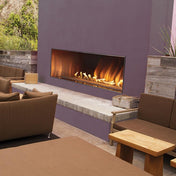
Outdoor rated also always means covered. No electric fireplace on the market is rated for open sky. Every manufacturer requires it to sit under a roof, protected from direct rain and direct sunlight, and most publish a specific overhang rule: the roof must project a distance equal to roughly half the height of the appliance, on the front and both sides. An uncovered deck or a pergola with open slats does not qualify.
Two more things that surprise people:
- The warranty is usually shorter outdoors. Dimplex, for instance, covers the same unit for five years indoors and one year outdoors. That is not a catch, it is an honest statement about what weather does to electronics.
- It is not going to keep anyone warm. An electric fireplace heats by fan-forced convection, which warms air, and outdoors that air rises and blows away. Buy it for the look and the focal point. If you want people to feel heat on a patio, that is gas, or overhead infrared patio heaters.
What We Recommend

The Modern Flames Landscape Pro Slim and Landscape Pro Multi are the cleanest recommendation, because Modern Flames publishes a dedicated outdoor rating and outdoor installation requirements for that pair specifically, with no conditions beyond the cover.
The Dimplex Ignite Evolve is the one to pick if the same model has to work indoors and out, since it is certified for both.
The Touchstone Sideline Outdoor is the affordable way in. It runs flame only with no heater, which given the point above is the honest configuration for outdoors anyway.
Rather than checking models one at a time, start from the collection. Everything in outdoor electric fireplaces carries a manufacturer outdoor rating, which is a far safer way to shop this category than reading product titles.
Best Value: Touchstone Sideline

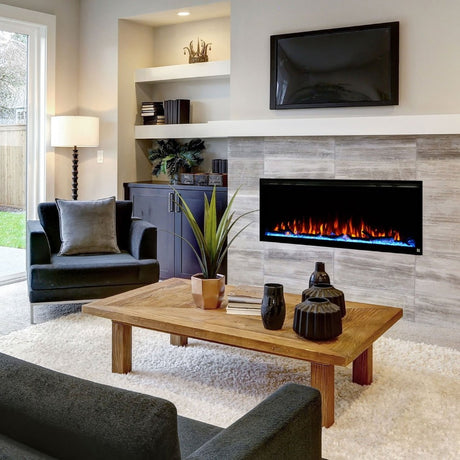
The Sideline is the range we point most people to when budget is the constraint, and it does not look like a compromise on the wall. It is really three tiers, and knowing which is which saves a lot of comparison.
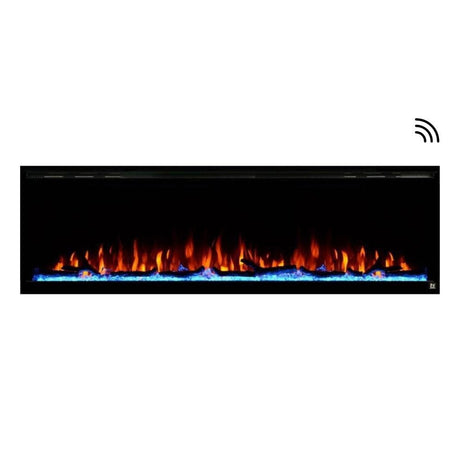
- Sideline. The core range, and the widest spread of sizes of anything we carry, from small alcoves up to full feature walls. Recesses or hangs on the wall without committing at purchase. Browse the lot in the Sideline series.
- Sideline Elite. A step up, with a deeper firebox and a more dimensional flame than the standard Sideline.
- Sideline Elite Pro. The top of the range, and the one to buy if the fireplace is the focal point of the room rather than a background element.
One installation note on the Elite Pro. It is a deep firebox, so on a standard 2x4 wall it projects rather than sitting flush. Touchstone sells a spacer kit that lets it partially recess into a 2x4, which pulls it back into the wall and gives a far cleaner finished edge than surface mounting alone. Worth adding to the order rather than discovering afterwards.
There is an outdoor Sideline too. The Sideline Outdoor is rated for a covered porch or patio and is the affordable way into an outdoor electric fireplace. It runs flame only with no heater, which outdoors is the honest configuration anyway, since warmed air blows away and a heater would be doing very little.
Best Wall Mounted: No Framing, No Construction

Not every fireplace needs to go inside a wall. A wall-mounted unit hangs on the surface like a television, which means no framing, no drywall work and nothing structural to undo later. It is the right answer for a rental, a finished room you do not want to open up, or anyone who would rather not involve a contractor.
One thing to check before you buy any of these. A great many electric fireplaces ship with mounting brackets in the box, and that is not the same as being designed to hang on a wall. If the firebox is only finished on the front, the raw sides of the box will be visible from every angle once it is up, and it looks like exactly what it is. Buy a model built for surface mounting with finished sides, or one that offers a trim kit to close the edges off.
The SimpliFire Allusion Slim is the cleanest of these, thin enough that it reads as a lit panel rather than a box on the wall, and it can be recessed later if you ever do open the wall up. The Touchstone Chesmont is the one to pick if you want flame from three sides without any framing at all.
For something that does more than heat, the Napoleon Stylus combines the fireplace with a shelf, display space and a USB charging port in one wall unit, which suits a bedroom, a home office or any room where wall space has to earn its keep. The full range is in wall mounted fireplaces.
Best Freestanding: Nothing to Install at All

A freestanding unit needs no wall, no framing and no installation beyond an outlet. You put it where you want it and plug it in, and you can take it with you.
Two shapes dominate. A stove is the traditional one, a cast body that sits in the room and reads as a wood stove without the wood. The Sierra Flame cast iron stove is our pick, and it suits a corner, a cabin or a room with no wall to spare.
Proportions, if a television is going above or on it. For a linear fireplace, match the width of the TV or go wider. That is what makes the wall read as balanced rather than accidental. A firebox can be a little narrower than the TV if there is a mantel above it doing the balancing. And a TV stand should be at least as wide as the television standing on it.
A media console is the other, combining the fireplace with the TV stand so one piece of furniture does both jobs. Napoleon's Essential Series covers this in several widths, including the Franklin for a 75-inch television. It is the most practical fireplace in this guide and the least architectural, and for a lot of living rooms that is exactly the trade people want. See free standing electric fireplaces.
Best for an Existing Fireplace Opening
If there is a masonry fireplace in the house that no longer gets lit, you do not have to touch the chimney to bring it back. There are three levels of effort, and they are worth telling apart before you shop.
Easiest: A Plug-In Log Set

An electric log set sits inside the existing firebox and plugs into a nearby outlet. No framing, no trim, no electrician. The Dimplex Revillusion log set is the one to start with, and the Napoleon Woodland is the alternative, both in several sizes so you can match the opening.
Middle Ground: An Insert
An insert fills the opening rather than sitting inside it, so you get a finished face and considerably more flame. The Modern Flames Redstone is the one we sell most of, in a spread of sizes. The Dynasty Presto is only eight inches deep, which is what you want when the original firebox is shallow. See electric fireplace inserts for the rest.
Best Result: Modern Flames Orion Traditional

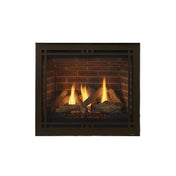
If the reclaimed hearth is going to be the thing people look at, this is the one. The Orion Traditional is our best-selling electric fireplace, it retrofits into an existing opening as well as building in from scratch, and it brings the recorded flame described above to a conventional firebox shape. It costs more than an insert and it looks it.
Measure the opening before you shop. Masonry openings are rarely square and almost never a standard size. Take the width at the front and the back, the height at both sides, and the depth at its shallowest point.
Best Traditional Look: Dimplex Revillusion

Almost every electric fireplace sold today is a flame behind a sheet of glass at the front of a shallow box. The Revillusion is built the other way round, and it is the one to look at if you want something that reads as a real hearth.
It ships with no front glass. The firebox is open, the way a masonry fireplace is, so there is no pane between you and the logs and no reflection of the room bouncing back at you. Dimplex offers a glass door kit as an option if you want one, but it is an accessory rather than the default.
And the flame has genuine depth. This is the part that separates it from everything else in this guide. Instead of an image at the front of the box, the flame appears to stand up in the middle of the firebox with the logs around it and the back wall visible behind it. Dimplex builds this with a partially frosted acrylic panel that kills reflections, plus a full-depth interior you can see through to the back. The effect is closer to a gas fireplace than any other electric fireplace we sell, because a gas fire also burns in the middle of the box rather than at the front of it.
The Revillusion 42 is the full firebox, the Revillusion 30 suits a smaller opening, and the 36-inch Portrait is taller than it is wide, which fits openings that a landscape firebox cannot.
What Actually Matters When You Compare Two of These
Spec sheets are crowded with numbers that make no difference to how the fireplace feels in the room. These are the ones that do.
- Wall depth, before anything else. A recessed fireplace has to fit inside the wall. A 2x4 wall gives you roughly 3.5 inches and a 2x6 gives roughly 5.5. Check the depth specification first and you will rule out half the market in one step.
- Plug or hardwire, which follows from how it is installed. If you are recessing the fireplace into a wall, you will usually be hardwiring it, because there is no sensible way to reach an outlet once it is built in. Freestanding and wall-mounted units can often just plug into a standard outlet, which is a large part of why people choose them. Inserts frequently go either way, depending on the model and on what is already at the opening. Confirm it in the manufacturer's manual for the specific model before you commit to a location, because this is the decision that determines whether an electrician is involved, and it is far cheaper to settle before the wall closes than after.
- How the flame is generated. Covered above, and it is the difference you will actually notice every day.
- Heat, and whether you want it. Most electric fireplaces land in the same range, rated to take the chill off a few hundred square feet, so heat output is rarely what separates two models. Nearly all of them run flame without heat, which is the setting people use for most of the year. If you do want real warmth, that is a specific shortlist rather than a spec to compare across the whole market: see electric fireplaces with powerful heaters, where the units that genuinely put out more are collected. Several of them reach their higher output only when hardwired to 240V, so that choice ties back to the wiring question above.
- Glass or no glass. A glass front is standard on linear units and gives a crisper image. An open-front firebox like the Revillusion looks more like a real hearth. It is an aesthetic choice, not a quality one.
- Trim, which is mostly a non-issue. If a fireplace needs trim, it almost always ships with it, so this is not a hidden cost to budget for. The one real exception is an insert going into an existing masonry opening that is larger or less regular than the insert. The trim in the box is sized to the appliance, not to your chimney, and it will not always cover the gap. Oversized trim kits exist for exactly this, such as the larger Redstone trims, but you will only know whether you need one after you measure the opening.
Where Electric Genuinely Beats Gas
Worth stating plainly, because it is the reason this category grew: an electric fireplace needs no chimney, no flue, no gas line and no combustion air. It can go on an interior wall, in a basement, in an apartment, or in a room where running a vent was never going to happen. Installation is framing plus electrical, and nothing else.
Where it does not beat gas is heat. A gas fireplace is a heating appliance; an electric one is a supplemental heater with a very good picture of a fire. If the goal is to warm a large open-plan room, look at indoor gas fireplaces instead and accept the venting that comes with them.
Our Recommendation
If you want the most convincing fire, buy a virtual fireplace. That is the whole category in virtual fireplaces, and within it the Modern Flames Orion series is where most people land. Pick the shape that suits the wall: Multi for three sides, Slim for a flat wall, Traditional for a firebox.
If you want one fireplace that does almost everything well, buy the Dimplex Ignite Evolve, or look across the rest of the Ignite series if you need a different size or a three-sided version.
If the budget is the constraint, the Touchstone Sideline is the range we point most people to, and it does not look like a compromise on the wall.
Still deciding? Our team works with these every day and can usually narrow it down to two models in one conversation. It helps if you know your wall depth and how wide a space you are filling.
- Call or text 866-713-2399
- Email support@modernblaze.com
Or if you would rather just browse, start with the full range of electric fireplaces.






2 comments
Hi, Julie.
One of our customer service representatives contacted you to help with your concerns. Please let us know if you need more help!
Looking for a large two two sided electric fire place to go in a wall I have a opening already in my wall 70 “L x 45”H do you have something that will fit in this space?