Fall Sale: Click Here

Free Shipping & Returns Learn More

Best Price Guaranteed Learn More

19,000+ Happy Customers

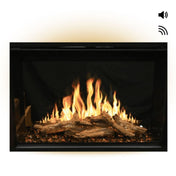
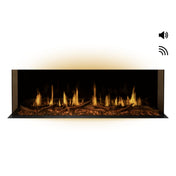
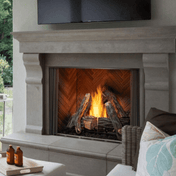
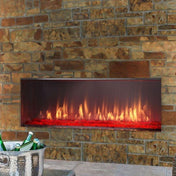
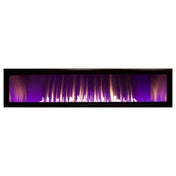
Water Vapor Fireplaces With Heaters

Water vapor fireplaces create a three-dimensional flame by lighting an ultrasonic water mist with LEDs, so the flame has real volume and stays cool to the touch. Every model in this collection adds a separate electric heating element, which means you can run the flame alone year round or add supplemental warmth when you want it.

Authorized Dealer • Full Warranties • Free US Shipping


Water vapor fireplaces with heaters do two jobs that are usually separate. The flame is made from ultrasonic mist lit by LEDs, which gives it real three-dimensional volume rather than a flat projected image, and a distinct electric heating element supplies actual warmth. The two run independently, so the fireplace works in July as well as January.

How the flame is made

A transducer under a shallow water reservoir vibrates fast enough to break the surface into a fine, cool mist. LEDs light that mist from beneath, and because the mist occupies real space the flame reads correctly from the side and from above, not just head on. It is the closest thing to a real flame you can put your hand through.

That is also the limitation worth knowing. The effect depends on water, so these units need a reservoir kept full and, in hard-water areas, distilled or filtered water to keep mineral scale off the transducer. For the wider comparison against LED and LCD flame technologies, read our water vapor fireplace buying guide.

What the heater adds, and what it does not

Most water vapor fireplaces sold anywhere produce no heat at all. The models here are the subset that include a real heating element, which is why this collection exists as a separate page.

Expect supplemental heat rather than primary heat. A heater on a standard 120V circuit is capped near 1,500 watts, or roughly 5,100 BTU, which takes the chill off the room you are sitting in. Larger and hardwired units go further, and the figure for each is on its product page. If heat is the main requirement rather than the flame, a ventless gas fireplace produces several times more.

Refill or plumb in

Smaller units use a removable tank you top up by hand, and run time between refills depends on tank size and flame setting. Larger models accept a direct water connection with automatic fill, which is what commercial installations and long-run-time fireplaces use. Decide this before you choose a location, because a plumbed unit needs a supply line where a tank-fill unit does not.

Where these get installed

Because there is no combustion, no flue, and no clearance-to-flame requirement, placement is far freer than with gas. These units go into built-in openings, into islands and see-through walls, and into apartments and commercial spaces where a vented appliance would not be permitted. For installation ideas, see creative water vapor fireplace installations.

Comparing flame technologies before you commit? Start with the most realistic electric fireplaces, which puts water vapor, LCD virtual flame and premium LED side by side, or browse everything in water vapor fireplaces and inserts.

Frequently Asked Questions about Water Vapor Fireplaces With Heaters

Do water vapor fireplaces give off heat?

Only the models that include a heating element, which is exactly what this collection filters for. The vapor effect itself produces no meaningful heat, because it is cool mist lit by LEDs. Units in this collection pair that effect with a separate electric heater, so the two run independently: flame with heat, flame without heat, or heat alone.

How does the flame effect actually work?

An ultrasonic transducer vibrates at a frequency high enough to shear water into a fine, cool mist. LEDs light that mist from below, and because the mist has physical volume the flame looks three-dimensional and can be viewed convincingly from the side, which is the main thing that separates it from a flat LED flame. You can put your hand through it.

How much heat do these produce, and will it heat a room?

The heater is a standard electric element, so on a 120V circuit it tops out around 1,500 watts, roughly 5,100 BTU. That is supplemental heat for the room you are in, not a replacement for central heating. Larger and hardwired models can go higher. The heat output for each unit is listed on its product page.

Do I have to refill the water, or can it be plumbed in?

Both approaches exist in this collection. Most models use a removable reservoir that you fill by hand, with run time between refills varying by tank size and how high you set the flame. Several larger units accept a direct plumbing connection with an automatic fill, which is the usual choice for commercial installations and for any fireplace that will run long hours.

What maintenance does a water vapor fireplace need?

Mostly water management. Mineral scale from hard water is the main thing that degrades the transducer over time, so manufacturers typically recommend distilled or filtered water and periodic cleaning of the reservoir and transducer disc. Follow the interval in your unit's manual. Beyond that there is no fuel, no flue, no ash, and no annual service.

Are water vapor fireplaces safe around children and pets?

The flame is, and that is a genuine advantage: it is cool mist and light, with no combustion, no emissions, and no carbon monoxide, so touching it is harmless. The heating element is a different matter and behaves like any electric heater, so observe the clearances in the manual and keep the heat outlet clear.

Not sure if Water Vapor Fireplaces With Heaters are for you?

View more options below.

Need help choosing the right setup?

Our experts can help with sizing, installation, and choosing the right model for your space.

Call or text: (866) 713-2399
Email:
support@modernblaze.com

Compare /3

Loading...