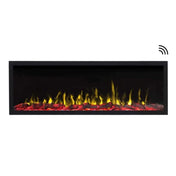

Upgrading a traditional masonry fireplace is one of the most effective ways to eliminate home heat loss and modernize your living space. However, before you can finalize your project, you must answer the most important question: Gas or Electric?
Picking the right fuel source is a major part of the process covered in our Complete Fireplace Insert Guide. While that guide covers sizing and logistics, this article dives specifically into the performance and lifestyle differences between gas and electric engines. Read to the end to see our final verdict on which fuel source actually matches your lifestyle.
| Feature | Electric Inserts | Direct Vent Gas | Ventless Gas |
| Heat Output | 5,000 – 10,000 BTUs | 20,000 – 55,000 BTUs | 25,000 – 40,000 BTUs |
| Efficiency | ~100% | 70% – 85% | 99.9% |
| Air Quality | Best (Zero Emissions) | Better (Sealed System) | Fair (Indoor Exhaust) |
| Venting | None Required | Coaxial Pipe (Outward) | None Required |
| Installation | DIY or Electrician | Certified Gas Pro | Certified Gas Pro |
| Year-Round Use | Yes (Flame w/o Heat) | No (Always outputs heat) | No (Always outputs heat) |
*Electric coverage depends on 120V vs 240V configurations and home insulation levels.
Performance: Whole-Home Heat vs. Zone Comfort
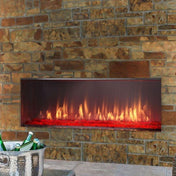
Ventless Gas units are designed to burn so efficiently that they do not require a chimney. Because there is no vent for heat to escape through, nearly 100% of the heat stays in your room.
Note: Ventless gas units are restricted in certain regions. Always check local codes regarding oxygen depletion sensors (ODS) and CO monitoring before installing a vent-free gas insert
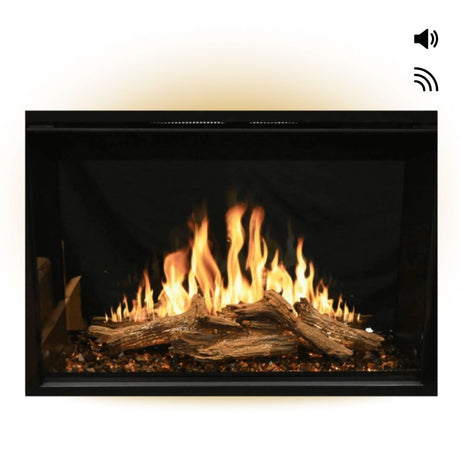
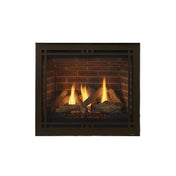
 In the photo: Monessen Solstice Ventless Gas Fireplace Insert
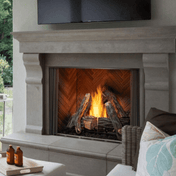
Direct Vent Gas units use a sealed combustion system with a dual-pipe setup. One pipe pulls fresh air from outside, while the other expels exhaust. Because some heat is naturally lost through the exhaust process, they are slightly less efficient than ventless units, but they offer a safer, more controlled burn.
 In the photo: Empire Innsbrook Direct Vent Gas Insert
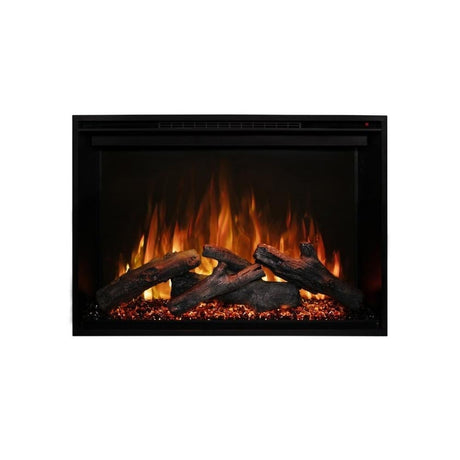
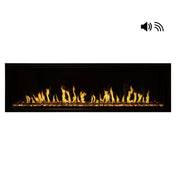
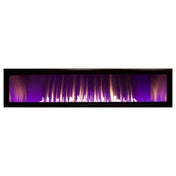
Electric fireplace inserts are the gold standard for "zone heating." Most 120V models produce roughly 5,000 BTUs, ideal for a 400 sq. ft. room. However, premium 240V units (like the Modern Flames Orion series) can warm up to 1,000 sq. ft. Because they require no venting, 100% of the heat stays in your room.
 In the photo: Modern Flames Orion Traditional
Installation and Real-World Costs
A gas insert is a permanent utility upgrade. Total project costs typically range from $3,500 to $8,000+ because they require a certified pro to run gas lines and install a chimney liner. This investment often yields a higher home resale value.
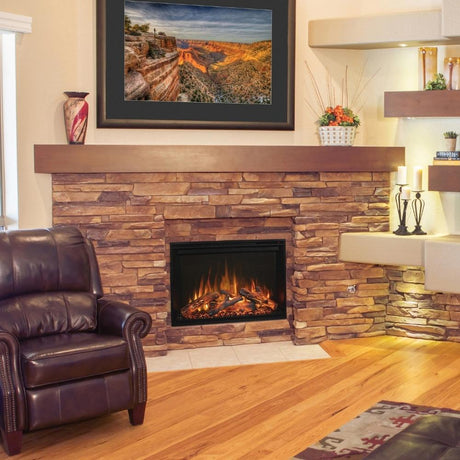
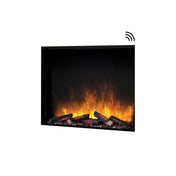
Electric inserts are far more accessible, ranging from $500 to $2,500. While many are "plug-and-play," high-output 240V models require a dedicated circuit installed by an electrician to prevent tripped breakers.
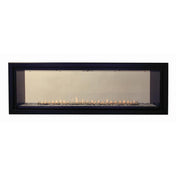
 In the photo: Dimplex Revillusion Electric Log Set
Aesthetics & Lifestyle
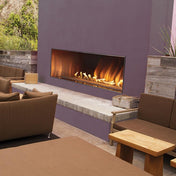
Gas Inserts offer the authenticity of a live flame. You get the physical warmth and traditional "dancing" fire that adds significant perceived value to your home.

In the photo: Empire Rushmore Direct Vent Gas Fireplace Insert
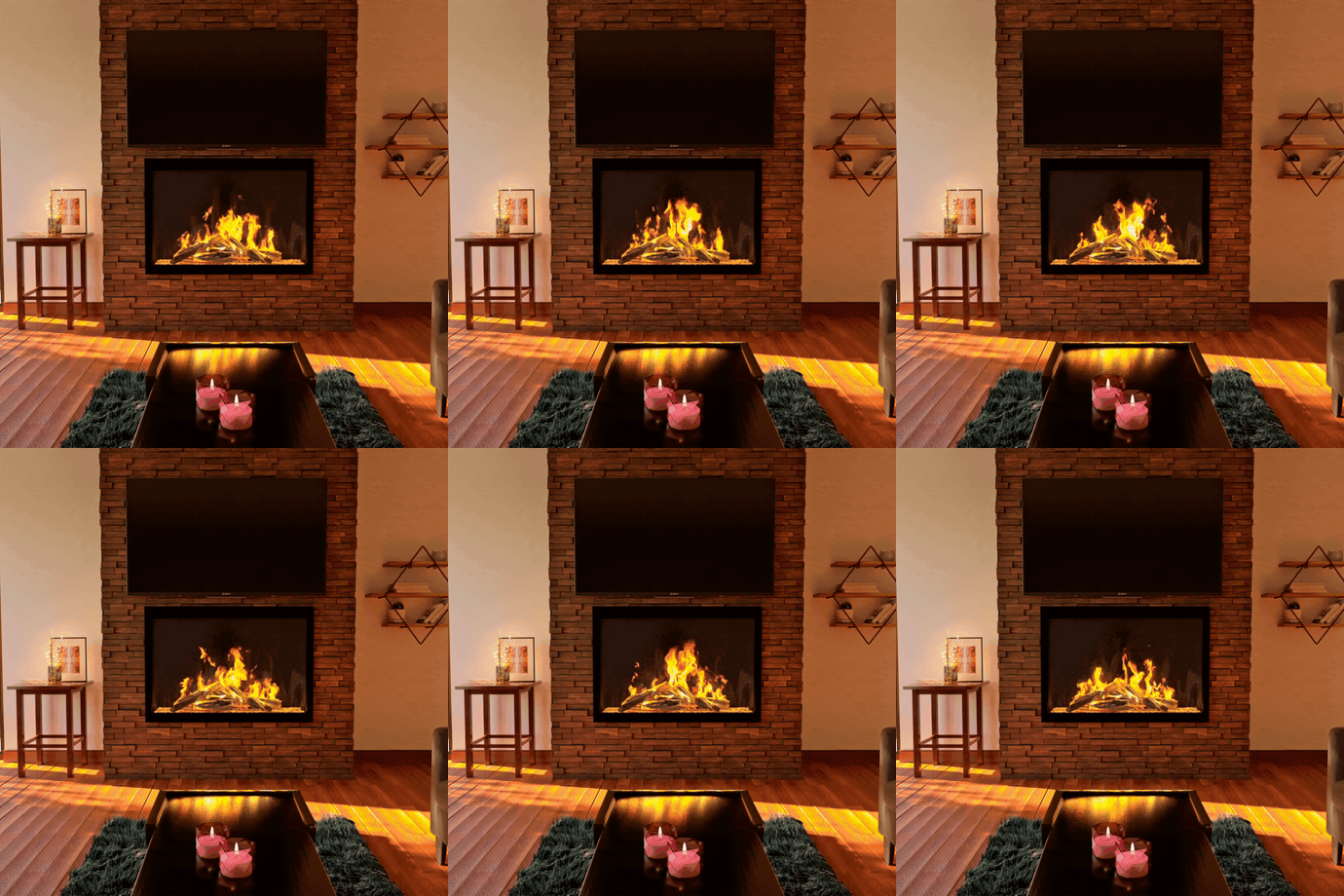
Electric Inserts have moved past the "fake" look of the past. Using advanced 2026 technology like Heliovision® video flames, units like the Modern Flames Orion Traditional offer incredible realism. A major bonus? You can run the flames without the heat during warmer months, something gas units can't do.

In the photo: Modern Flames Orion Traditional V2
Cleanliness, Air Quality, and Emissions
If you are sensitive to indoor air quality or want the "greenest" possible footprint, the hierarchy of choice is clear. Combustion, even when highly efficient, creates byproducts. Here is how they rank:
-
Electric Inserts: Electric units are the cleanest possible option. Because they rely entirely on electricity with no combustion, they produce zero localized emissions. No carbon monoxide, no smoke, and no nitrogen dioxide. It is the cleanest option for homes with allergies or asthma.
-
Direct Vent Gas: Because the combustion is completely sealed off from your room air, it has almost no impact on your indoor air quality. The "bad stuff" goes outside, and your indoor air stays fresh. You get the aesthetic of a real fire without compromising indoor air quality.
-
Ventless Gas: These units exhaust directly into the living space. While engineered to meet safety standards, these units release combustion byproducts directly into the home.
Safety Note: Every ventless unit includes an Oxygen Depletion Sensor (ODS) that shuts the unit off if oxygen levels drop below 18%. However, they remain prohibited in certain regions (like California) and specific rooms (like bedrooms). Always check your local codes.
Final Verdict: Which matches your home?
- Choose Gas if: You need a primary heat source for large spaces, prefer a live flame, and have the budget for a professional utility installation.
- Choose Electric if: You prioritize air quality, want a zero-emission solution, and need year-round ambiance with a DIY-friendly installation.
Ready to Upgrade Your Hearth?
Browse our curated collections or talk to one of our experts to find the perfect fit for your masonry opening.
Expert Advice: Call us at 866-713-2399 or check out our full sizing guide.