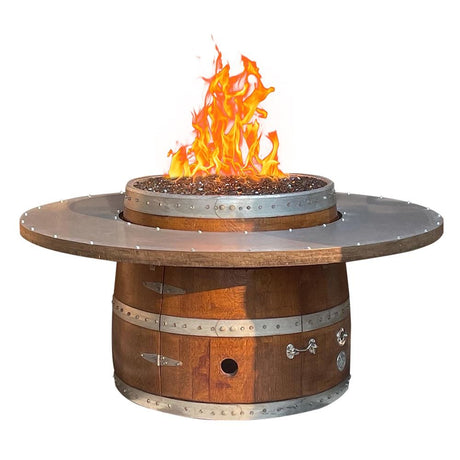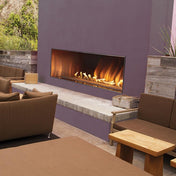

Imagine settling onto your patio after a long day. A warm flame flickers at the center of your seating area while family and friends gather around to relax, talk, and enjoy the outdoors.
An outdoor fire pit can transform a backyard, restaurant patio, hotel courtyard, or pool area into a welcoming gathering space. However, selecting the right model involves more than choosing a shape or finish that complements the furniture.
This guide walks through the main options and explains how to choose with confidence. You can also explore the complete Modern Blaze outdoor fire pit collection to compare wood-burning fire pits, propane fire pits, outdoor gas fire pits, fire pit tables, fire bowls, cooking models, and custom burner systems.

Types of Outdoor Fire Pits
Outdoor fire pits can be grouped by fuel, shape, installation style, material, and intended use. The three main fuel choices are wood, liquid propane, and natural gas. Ethanol is also available in selected contemporary fire pit tables.
Wood-Burning Outdoor Fire Pits
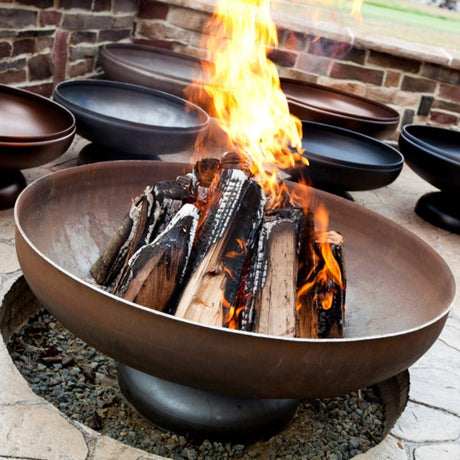
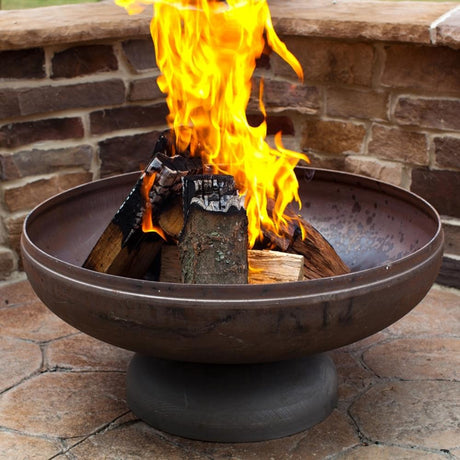
A wood-burning outdoor fire pit offers the most traditional experience. Real logs create naturally moving flames, glowing coals, crackling sounds, and the familiar aroma of a campfire.
Wood fires can provide substantial radiant warmth when fueled with dry, seasoned firewood. Handcrafted steel fire pits may also become permanent landscape features, developing more character as their surfaces weather over time.
The tradeoff is additional work. You need to store firewood, build and tend the fire, manage smoke and occasional sparks, and remove cooled ash after use. Local burn bans or neighborhood rules may also limit when a wood fire can be used.
A wood-burning fire pit may be a good fit when:
- You want an authentic campfire atmosphere.
- You enjoy building and tending a real fire.
- You have an open outdoor area with adequate clearances.
- You have a practical place to store dry firewood.
- Wood burning is permitted by your local authority and homeowners association.
Explore handcrafted bowls and freestanding models in the Modern Blaze wood-burning fire pit collection.
Propane Fire Pits
A propane fire pit gives you a real flame without the time required to build a wood fire. Many models light within seconds, allow you to adjust the flame, and leave no wood ash behind.
Propane is often the most practical gas option when a property does not have natural gas service or when extending a permanent gas line would be costly. Depending on the design, the cylinder may fit inside the base or sit in a separate approved tank enclosure nearby.
A propane fire pit may work well when:
- You do not have a natural gas line near the patio.
- You want more flexibility in choosing the location.
- You prefer fast ignition and adjustable flames.
- You want to avoid wood smoke, ash, and flying embers.
- You are furnishing a residential patio, rooftop, pool area, or seasonal space.
Compare tables, bowls, and freestanding models in the Modern Blaze propane fire pit collection.
Natural Gas Outdoor Fire Pits
A natural gas fire pit connects to a professionally installed gas line. Because there is no portable cylinder to refill, natural gas is often the most convenient option for a permanent fire feature that will be used regularly.
This can be especially helpful for hotels, restaurants, resorts, apartment communities, and other commercial spaces where changing propane tanks could interrupt operation.
A natural gas fire pit may be the right choice when:
- You already have natural gas service at the property.
- You are planning a permanent patio or landscape feature.
- You expect to use the fire pit frequently.
- You do not want to store or conceal propane cylinders.
- You are coordinating a new outdoor kitchen, pool, courtyard, or hospitality project.
Browse permanent fire features in the Modern Blaze outdoor gas fire pit collection.
Wood vs Propane vs Natural Gas Fire Pits
| Feature | Wood-Burning Fire Pit | Propane Fire Pit | Natural Gas Fire Pit |
|---|---|---|---|
| Startup | Requires firewood, kindling, and time to establish the fire | Usually starts with a match-lit, spark, or electronic ignition system | Usually starts with a match-lit, spark, switch, remote, or electronic system |
| Flame control | Managed by adding or repositioning wood | Adjustable on many models | Adjustable on many models |
| Smoke and ash | Produces smoke, ash, soot, and occasional sparks | No wood smoke or ash during normal operation | No wood smoke or ash during normal operation |
| Fuel storage | Requires dry firewood storage | Requires a portable cylinder or fixed propane supply | No portable fuel storage required |
| Placement flexibility | Depends on local rules, surface, and clearances | Usually more flexible than natural gas | Limited by the location of the gas line |
| Installation | Freestanding models may require minimal setup | Portable models may need limited setup; fixed models require professional planning | Usually requires a licensed gas professional |
| Cleanup | Requires ash removal and occasional interior cleaning | Requires burner, media, drainage, and exterior care | Requires burner, media, drainage, and exterior care |
| Cooking | Possible with a model specifically designed for cooking | Only when approved by the manufacturer | Only when approved by the manufacturer |
| Best suited to | Traditional campfire experiences | Convenience and flexible placement | Permanent installations and frequent use |
Propane Fire Pits vs Wood-Burning Fire Pits
The difference is most noticeable at the beginning and end of the evening.
A propane fire pit can usually be lit within seconds. You can adjust the flame as the temperature changes and shut it off when guests are ready to leave. There is no wood to stack, no smoke following people around the seating area, and no ash to remove the following morning.
A wood fire takes more time and attention, but that process is part of its appeal. The changing flames, glowing embers, crackling sounds, and aroma are difficult to duplicate with gas.
Choose propane when convenient operation matters most. Choose wood when building and tending the fire is part of the experience you want.
Is an Outdoor Gas Fire Pit Worth the Investment?
An outdoor gas fire pit is often worth the investment when it will be used regularly. The greatest benefit is how little effort stands between you and the fire.
A permanent natural gas installation normally costs more upfront because the line may need to be installed, extended, or resized. Permits, shutoff valves, electrical work, drainage, ventilation, and custom construction may also affect the total project cost.
In return, the fire feature is ready whenever you want to use it. For homeowners who entertain frequently and commercial properties that need reliable operation, that convenience may justify the additional installation expense.
Compare the complete installed cost rather than the fire pit price alone. A lower-priced model may ultimately cost more if it requires extensive gas work, electrical service, special delivery equipment, or a custom foundation.
Propane vs Natural Gas Operating Costs
Operating cost depends on the burner’s BTU input, flame setting, local fuel price, outdoor temperature, and the number of hours used.
Estimating Propane Cost
One gallon of propane contains approximately 91,500 BTUs. To estimate theoretical runtime, multiply the usable gallons in the tank by approximately 91,500 and divide the result by the burner’s BTU-per-hour input.
A standard 20-pound propane cylinder generally holds about 4.5 to 4.7 gallons when properly filled. A higher-output burner will use that fuel faster than a smaller burner or the same fire pit operated on a lower setting.
Estimated seasonal propane cost = expected number of refills multiplied by your local refill or exchange price.
Estimating Natural Gas Cost
Natural gas is commonly billed by therm. One therm represents approximately 100,000 BTUs.
Estimated natural gas cost per hour = burner BTUs divided by 100,000, multiplied by your local cost per therm.
Natural gas often costs less per unit of heat than propane purchased in portable cylinders. However, the upfront cost of installing the line should be included when comparing the two options.
Do Propane Fire Pits Provide Enough Heat?
A properly sized propane fire pit can provide comfortable warmth around a defined seating area. However, heat performance depends on more than the advertised BTU input.
Wind, seating distance, burner shape, flame height, media placement, and patio exposure all influence how much heat guests actually feel. A large BTU rating does not guarantee that the warmth will be directed toward the seating.
For a large or exposed commercial patio, the fire pit may be more effective as a focal point than as the only heat source. Directional patio heaters can provide more consistent warmth across tables and walkways.
How to Choose the Right Outdoor Fire Pit
Start with the practical requirements of your space before choosing a color, finish, or shape. The right fire pit should fit the patio, fuel supply, furniture layout, expected use, and installation conditions.
Consider How Often You Will Use It
If you expect to light the fire several evenings each week, the convenience of natural gas may justify the added installation cost. If the fire pit will be used occasionally or may need to move, propane may make more sense.
Wood may be the better choice when building the fire is part of the experience rather than an inconvenience.
Decide Whether You Want Heat, Ambiance, or Both
A visible flame does not always translate into strong outdoor heating. Wind, burner design, seating distance, flame height, and outdoor temperature all affect how much warmth people feel.
Large wood fires can provide strong radiant warmth. Gas fire pits provide more predictable flames, but many are designed primarily to create atmosphere around a defined seating area.
For large or windy patios, consider supplementing the fire feature with dedicated outdoor patio heaters that direct heat toward occupied areas.
Match the Shape to the Furniture Layout
- Round fire pits work naturally with chairs positioned in a circle.
- Square fire pits suit four-chair arrangements and symmetrical patios.
- Oval fire pits soften a linear layout while still pairing well with sofas.
- Rectangular fire pits work well with loveseats and sectional seating.
- Linear fire pits complement long sofas, parallel seating, and large commercial spaces.
Consider Who Will Operate and Maintain It
A homeowner who enjoys tending a fire may be comfortable with wood. A hotel or restaurant may benefit from a controlled gas system that staff can operate consistently.
For commercial projects, consider who will light the fire, turn it off, inspect it, protect it from weather, and arrange service when needed.
Which Fire Pit Format Suits Your Layout
Format matters more than finish. The shape of the fire feature decides how seating works around it, and unlike a color choice it is not something you can change later.
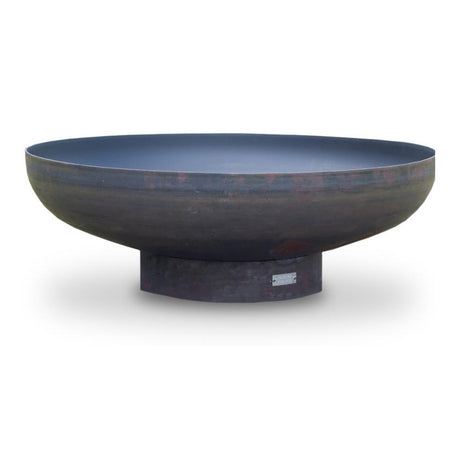
An Open Bowl, for a Traditional Wood Fire
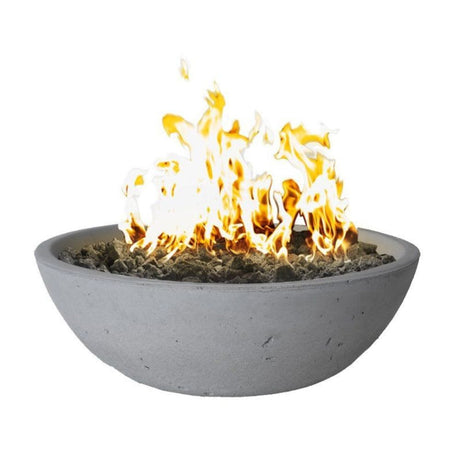
A low steel bowl puts nothing between you and the flame, and it drops into an existing seating circle without rearranging the furniture. Of all the formats, this is the one that behaves most like a campfire.

A Linear Table, for Sofas and Sectionals
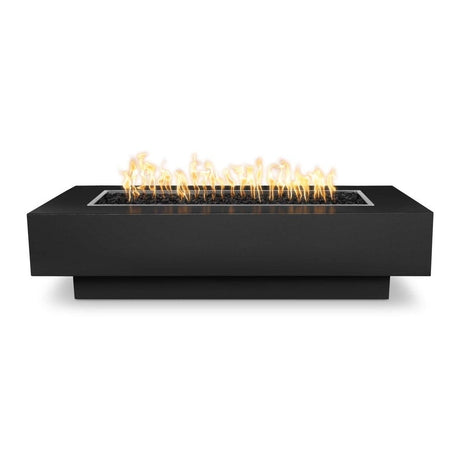
A long fire table follows the line of a sofa or sectional instead of fighting it. The surface also earns its space during the day, when the burner is off and it is working as a table.

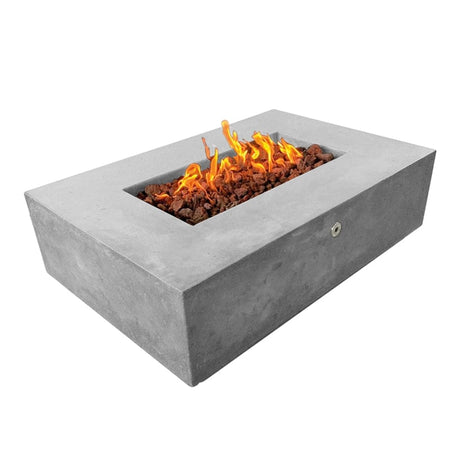
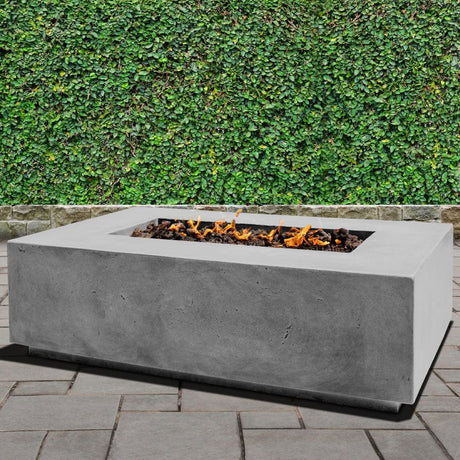
A Rectangular Concrete Table, for Designed and Commercial Spaces
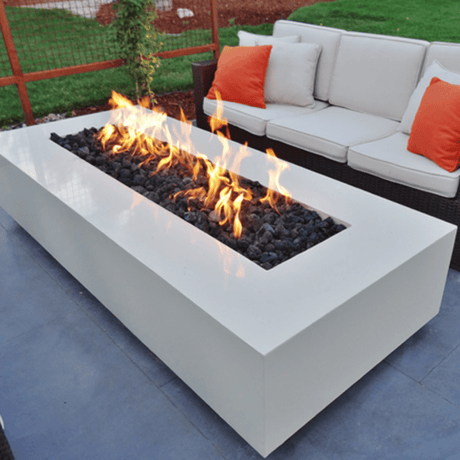
Concrete tables come in the widest range of sizes, finishes, fuel configurations and ignition systems, which is what makes them the usual choice on specified projects. The Firegear Sanctuary is a worked example: one model, many configurations, which is why it turns up in hotels, restaurants, resorts and multifamily courtyards.
On a commercial project, pick the ignition system around who will operate it and what local codes require, not around convenience alone.

A Grill Format, When the Fire Is Also the Cooking
A ring cooktop around the fire lets people cook and stand around the flame at the same time, so the fire pit becomes the activity rather than the backdrop to it.

A Fire and Water Bowl, for Pool and Spa Surrounds
Combining flame with moving water gives you a focal point that works with a pool rather than competing with it, and the sound carries when the fire is not lit.
For specific model recommendations in each of these formats, see Best Fire Pits to Buy in 2026. This guide covers how to choose. That article covers what to buy.
Outdoor Fire Pit Size and BTU Output
A fire pit should feel proportionate to the patio and furniture. A model that is too small may disappear visually, while an oversized fire feature can crowd the seating area and consume more fuel than necessary.
Measuring the Space
Measure the full patio and mark the locations of furniture, walls, railings, doors, stairs, siding, roof lines, umbrellas, pergolas, trees, and landscaping.
Then review the required side and overhead clearances for the specific model. Do not assume that a fire pit will fit simply because its outside dimensions fit within the open area.
Planning the Seating
Round bowls work naturally with individual chairs arranged in a circle. Rectangular and linear models pair well with sofas and sectionals. Oval designs create a softer transition between curved and straight furniture.
Leave enough room for guests to enter and exit the seating area without passing too close to the flame.
Understanding BTU Ratings
BTU input describes how much fuel the appliance can consume. It is useful for comparing burner capacity and calculating fuel requirements, but it does not tell you exactly how warm the surrounding area will feel.
Also consider:
- The length or diameter of the burner
- The flame pattern
- The adjustable flame range
- The seating distance
- The direction and strength of the wind
- The type and depth of fire media
- The patio’s level of exposure
- The available gas pressure and volume
Do You Need a Gas Line for an Outdoor Gas Fire Pit?
You need a permanent gas line when purchasing a natural gas fire pit or when the project uses a fixed propane supply. A propane fire pit designed for a portable cylinder does not require connection to the home’s natural gas system.
Some fire pits can be ordered in either fuel configuration. Others may be converted only with a manufacturer-approved kit and procedure.
Before ordering, confirm:
- The exact fuel configuration
- Whether the propane tank fits inside the unit
- Whether a separate tank enclosure is needed
- The approved regulator and cylinder size
- The allowed hose length and routing
- The gas-line size and available pressure
- Whether the unit can be converted later
- Whether professional connection is required
Never connect a propane model to natural gas or a natural gas model to propane without the exact manufacturer-approved components and instructions.
Outdoor Fire Pit Ignition Systems
Match-Lit Ignition
A match-lit system is generally the simplest option. The user follows the manufacturer’s lighting procedure, opens the gas control, and lights the burner with an approved extended lighter or match.
Match-lit systems usually do not require electricity and contain fewer electronic components. They require hands-on operation and may not provide the flame-monitoring features needed for some commercial projects.
Push-Button Spark Ignition
A push-button system creates a spark near the burner while the gas control is operated. It provides convenient residential operation without necessarily requiring a permanent electrical connection.
Electronic Ignition
Electronic systems may support wall switches, timers, remote controls, high-and-low flame settings, smartphone operation, or building-management integration.
Selected electronic systems also monitor the flame and stop the fuel supply when a stable flame is not detected. This can be particularly useful for commercial properties and projects where the fire feature needs a more controlled operating system.
Electronic ignition may require power, drainage, transformer placement, control access, and additional service planning.
For custom projects, compare available options in the Modern Blaze outdoor gas burner collection.
Outdoor Fire Pit Safety
Look for a tested outdoor appliance, clearly stated fuel requirements, compatible controls, accessible shutoffs, and safety components suited to the ignition system.
- Flame-sensing shutoff: Stops gas flow on selected systems when a stable flame is not detected.
- Accessible manual shutoff: Allows the fuel supply to be turned off when the fire pit is not in use.
- Approved regulator and hose: Essential for propane models connected to a cylinder.
- Stable construction: Helps reduce movement or tipping.
- Drainage: Helps prevent water from collecting around the burner and controls.
- Enclosure ventilation: Required for many propane and built-in installations.
- Wind guard compatibility: May help stabilize the flame on exposed patios.
- Protective cover: Helps keep moisture and debris away from a cool, unused fire pit.
Outdoor Fire Pit Materials
- GFRC: Provides the substantial appearance of concrete at a generally lighter weight than traditional solid concrete.
- Stainless steel: Commonly used for burners, pans, and modern enclosures.
- Powder-coated steel: Offers a clean finished appearance in a range of colors.
- Carbon steel: Creates a substantial, sculptural look and may develop a natural patina.
- Corten steel: Is designed to form a weathered surface over time.
- Aluminum: Is lightweight and naturally resistant to rust.
- Copper: Develops a distinctive patina and is often used for premium fire and water features.
- Stone or masonry: Works well for custom installations built around an approved burner and pan system.
Even weather-resistant materials benefit from drainage, periodic cleaning, seasonal inspection, and a fitted protective cover.
Essential Outdoor Fire Pit Accessories
Protective Cover
A fitted cover helps keep rain, pollen, leaves, and debris away from the burner and exterior finish. Install it only after the fire pit is fully off and completely cool.
Burner Cover or Lid
A rigid burner cover protects the media and may create a flatter surface on compatible fire pit tables. It does not replace a complete weather cover unless the manufacturer states otherwise.
Wind Guard
A glass wind guard can help stabilize the flame and create a visible boundary around the burner. Use only a wind guard approved for the specific model.
Lava Rock
Lava rock creates a natural appearance and is commonly used as a base or exposed fire medium. Follow the required quantity, size, depth, and placement instructions.
Fire Glass
Tempered fire glass creates a brighter, more reflective appearance. Use only fire-rated media approved for the burner.
Propane Tank Cover
A propane tank cover conceals an external cylinder when the tank does not fit inside the fire pit. Confirm that the approved hose routing and spacing can be maintained.
Explore compatible products in the Modern Blaze outdoor fire pit accessories collection and compare decorative media in the Modern Blaze fire glass collection.
Outdoor Fire Pit Maintenance
Regular care helps protect the burner, finish, drainage system, and structural components. Always follow the maintenance instructions for your specific model.
- Remove leaves, ash, dirt, insects, and other debris before use.
- Keep burner ports, ventilation openings, and drainage holes clear.
- Check gas hoses, regulators, ignition components, grates, and screens for visible damage.
- Clean the exterior only with products approved for the material and finish.
- Burn dry, untreated firewood in wood-burning models.
- Use a fitted cover only after the fire pit is completely off and cool.
- Arrange professional service if you smell gas, notice an unusual flame, or experience unreliable ignition.
If you suspect a gas leak or damaged component, turn off the fuel supply and do not operate the fire pit until it has been inspected by a qualified professional.
Outdoor Fire Pit Buying Checklist
- Choose the fuel type based on the experience you want.
- Measure the entire patio and seating area.
- Identify nearby combustible materials.
- Check all required clearances.
- Confirm the exact fuel configuration.
- Determine where the propane tank will be stored.
- Verify that the fuel supply can support the burner.
- Select an ignition system appropriate for the project.
- Confirm whether electricity is required.
- Plan ventilation, drainage, and service access.
- Check local permits and burn restrictions.
- Use a licensed gas professional for permanent connections.
- Plan delivery access for large or heavy fire pits.
- Use only approved fire media and accessories.
Find the Right Outdoor Fire Pit for Your Space
The right outdoor fire pit should feel like a natural part of your patio, not an afterthought. It should fit the furniture, suit the way you entertain, and work with the fuel supply and installation conditions available at the property.
Shop the complete Modern Blaze outdoor fire pit collection to compare wood-burning models, propane fire pits, natural gas fire pits, fire pit tables, fire bowls, fire and water features, and cooking fire pits.