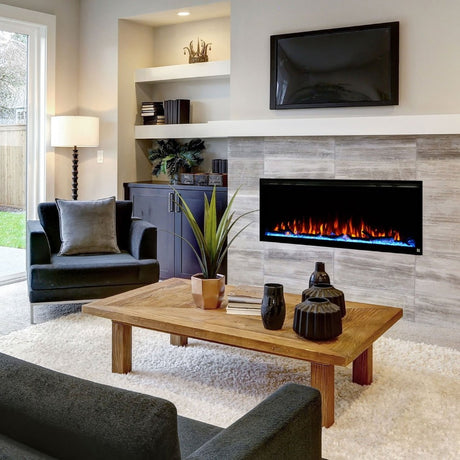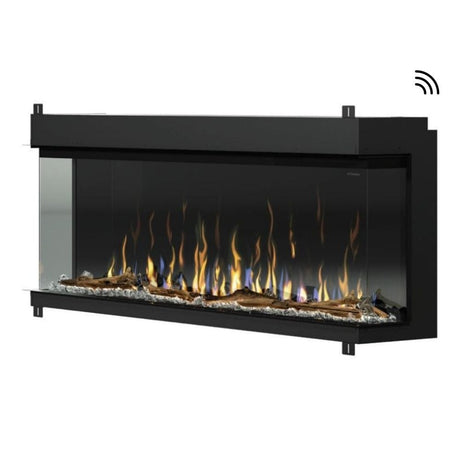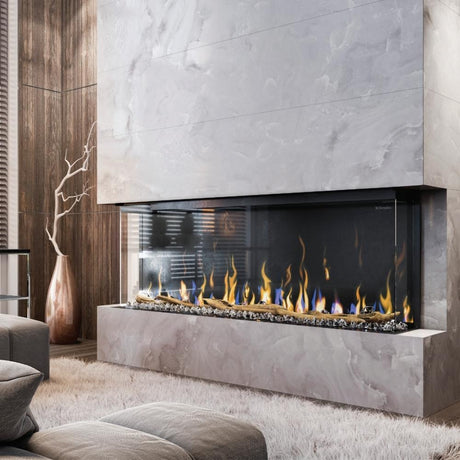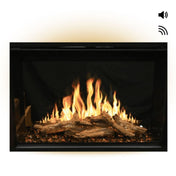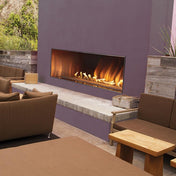

A fireplace in a restaurant or a bar earns its place three times over. It is the table guests request, the thing they photograph and post, and the reason a room reads as somewhere to settle in rather than somewhere to eat and leave. In a hotel lobby it does the same job for a space people are only passing through.
What it is not, in a commercial build-out, is a straightforward purchase. The unit has to survive a duty cycle no household will ever put it through, satisfy an inspector, and go in without adding weeks to a construction schedule. This guide covers the fireplaces that actually work in hospitality and the questions to settle before you specify one. Everything here is from our commercial range. If you are working to a design brief rather than a spec sheet, most of it also sits in modern fireplaces.
Why Almost Every Commercial Fireplace We Sell Is Electric
Four reasons, and none of them is about how the fire looks.

It Does Not Slow the Build

A gas fireplace brings a gas line, a combustion appliance and usually a separate permit and inspection into a project with a fixed opening date. An electric fireplace needs a framed opening and a circuit. Nothing is vented, nothing is burned, and the work stays with trades already on site.
On a build-out, that is often the whole argument.
You Can Run the Flame Without the Heat

A dining room is already a warm place. The kitchen is pushing heat into it, a full room of guests is generating more, and the lighting adds its own. The last thing most operators want in service is another heat source.
An electric fireplace runs its flame and its heater on separate controls, so for most of the year you take the light and the movement and add nothing to the room temperature at all. That is the setting a restaurant lives in.
Then on a cold evening you switch the heat on and get a gentle ambient warmth in the immediate area around the unit, which is exactly what the two tables nearest it want in November. A gas fireplace cannot do this. Its flame is its heat, so you take both or neither, and in a busy dining room in July that usually means the fireplace stays off.
That split is also where the running cost goes. On an electric fireplace the heating element is essentially the entire power draw. The flame is LEDs, or a screen, plus a small motor, so running it without heat costs a fraction of running it with heat, and it is closer to leaving a light on than to operating an appliance. Manufacturers describe the ambiance-only mode in pennies per hour rather than dollars.
For a venue that wants the fire lit every night from open to close, that is the difference between a line on the utility bill and a rounding error. Gas has no equivalent setting, because a gas fireplace consumes fuel whenever there is a flame in it.
Nobody Can Burn Themselves On It

An electric fireplace has a glass front that stays cool to the touch, because there is no combustion behind it. Dimplex, Dynasty and Nexfire all state it plainly in their own documentation. It is a property of the technology, not a feature one brand added.
Gas does not work that way. Its glass gets hot enough to burn on contact, which is why the category ships with safety barriers and warning labels. At home that is a risk you brief your own family about. In a bar it is a hot surface at hip height in a room full of strangers, some of them drinking, some of them children, none of them briefed. That is an insurance conversation you do not have to have if the glass is cool.
Water vapor removes the question entirely. It belongs to the electric family but works differently: the flame is ultrasonic mist lit from below, so there is no heating element at all and you can put your hand straight through it. Worth knowing for a lobby, a waiting area, or anywhere at child height.
None of this rules gas out. It decides where gas goes: behind a hearth, set back from circulation, or outdoors. Electric goes anywhere guests walk past it.
It Is Serviced From the Front, and Barely Needs Servicing
This one only becomes obvious after something goes wrong, which is the worst time to discover it.
An electric fireplace is serviced from the front. The glass comes off and the components sit behind it. That matters enormously in a commercial build, where the fireplace is usually framed into millwork with a wall, a plant room or someone else's kitchen directly behind it. Access from the front means you never have to answer the question of how to reach the back.
Some units make this genuinely easy. The Napoleon Astound Built-In has a hinged front glass that folds down on supporting cylinders, which its own manual describes as being for easy service, and its trim and side panels are held on by magnets rather than fasteners. On a unit that is going to be opened by whoever is on shift rather than by the installer, that is worth specifying for. Modern Flames gives glass removal its own section in the Orion manuals, and on the Slim it is two screws.

And there is very little to service in the first place. No combustion means no annual gas inspection, no pilot assembly, no flue to sweep and no soot on the glass. Realistically the maintenance is wiping the glass and keeping the vents clear of dust. Compare that with a gas appliance in a commercial setting, where an annual service visit by a qualified fitter is a recurring line item and a compliance obligation, and the operating difference over ten years is substantial.
Three Questions a House Never Asks

Whichever fuel you land on, a commercial installation has to answer these and a residential one does not.
- Will it run every night? A restaurant fireplace works every service, all season. Buy from a manufacturer whose units are specified into commercial projects, not the cheapest thing that fits the hole.
- How does it come out? Front-serviced electric units make this easy, but confirm it for the specific model rather than assuming. Anything serviced from the rear needs an access route planned before the wall closes, or a warranty claim becomes a demolition job.
- What will the inspector say? Commercial occupancy is read differently from residential on clearances, finishes and barriers. Ask at design stage, not at inspection.
Then Choose Virtual, Not LED

Once you have settled on electric, there is a second decision that matters more in hospitality than anywhere else, and most buyers do not know it exists.
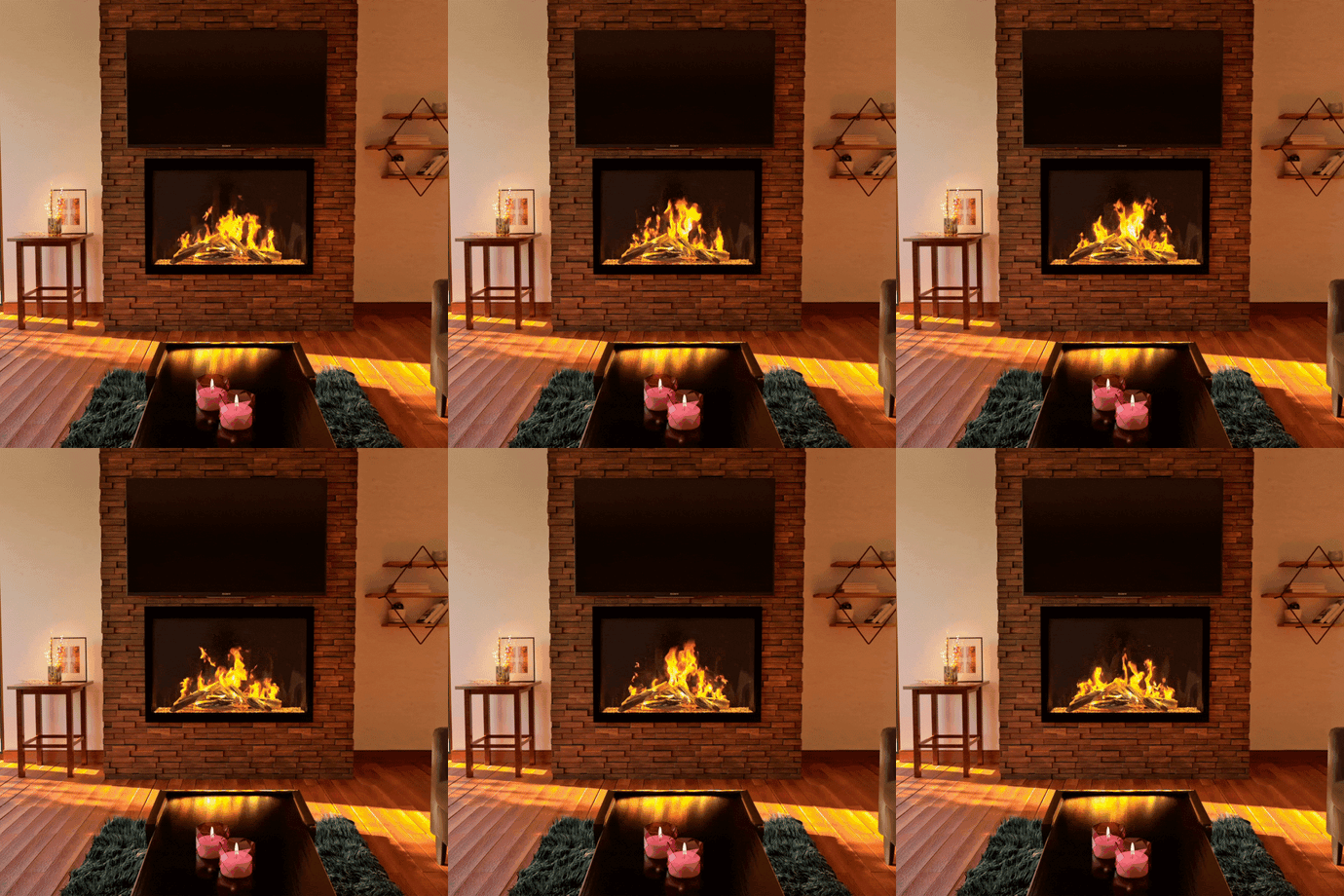
A virtual fireplace plays a recording of a real fire on a screen. The movement is irregular the way actual combustion is, because it is actual combustion, filmed. An LED unit synthesizes a flame out of light, usually by bouncing LEDs off a moving reflector. Both look convincing in a photograph. Only one holds up when a guest is standing three feet away waiting for a table.
In a house, the buyer walks past their fireplace a few times a day and stops noticing it. In a restaurant, a new set of strangers evaluates it every night, up close, often with a phone in hand.
The Part That Protects the Investment

Here is the argument that matters to an owner rather than a designer. The Modern Flames Orion series, the best known of the virtual fireplaces we carry, in its Version 2 form receives new flame styles over the air, through the manufacturer's app, after it is installed. The fireplace you fit this year is not the fireplace you have in five years.
That reframes the purchase. Most fixtures in a dining room start aging the day they are installed and get replaced at the next refresh. A fireplace that keeps receiving new content does not date the same way, which means it does not land on the capital budget again in a few years. For a venue that redecorates on a cycle, that is the whole case.
Pick the shape to suit the room:
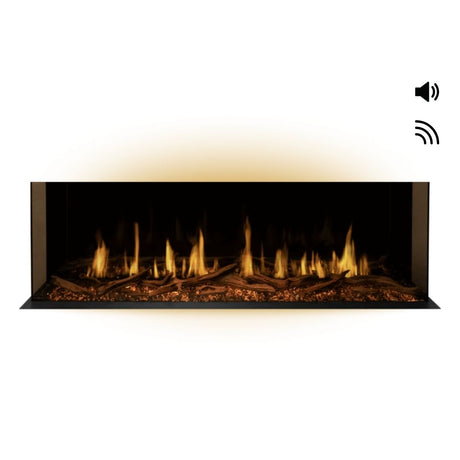
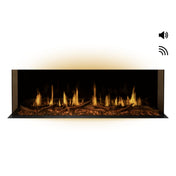
- Orion Multi, three-sided, for a peninsula, a half-wall or the end of a bar.
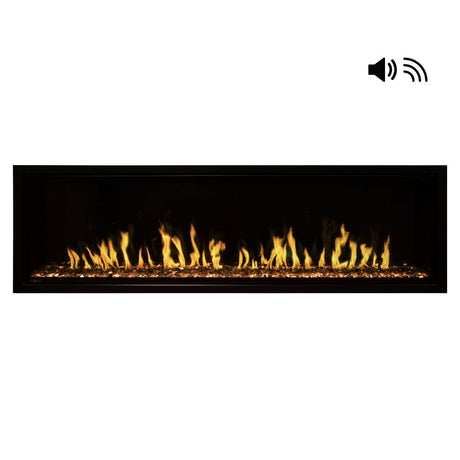
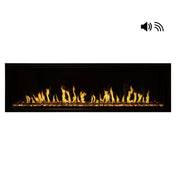
- Orion Slim, single-sided and linear, for a flat wall in a 2x6 partition.
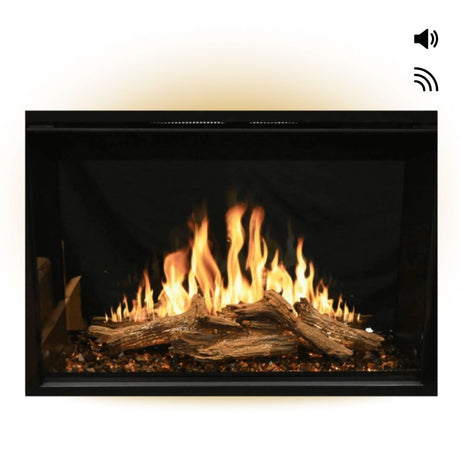
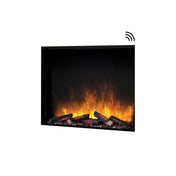
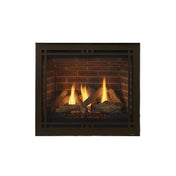
- Orion Traditional, a conventional firebox shape, for a room with a classic or heritage feel.
Specify Version 2. The over-the-air updates are a V2 feature. Version 1 units can still receive new flames, but it means shipping a physical USB unit and someone on site swapping it, which is exactly the sort of task that never happens in a working venue.
Behind the Bar: One Long Run of Flame

The back of a bar is the best fireplace location in most rooms. It is already the wall everyone faces, it is lit, and a long ribbon of flame under the bottle display does more for the room than any amount of accent lighting.
Length is the constraint, and there are three ways to solve it.
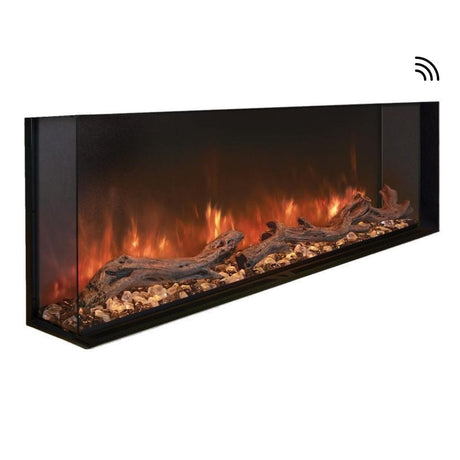
- The longest single unit is the Modern Flames Orion Multi, which reaches ten feet in one piece and shows a recorded flame rather than a light effect. It is the premium answer and it looks like it.
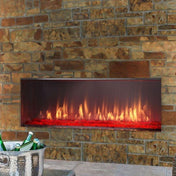
- Longer than any single unit means linking, and two models do it. The Dimplex Ignite XL Bold connects several units into one continuous run, so the total length is limited by the wall rather than the product. The SimpliFire Triton does the same and is the one on the cover of this article, running the length of an airport lounge wall. On a linked run of three or more its middle units open at both ends, so the flame reads as one line. Budget a separate circuit per unit: linking joins the fireboxes and pairs the controls, but each one still needs its own supply.
- The value option is the Dimplex IgniteXL 100-Inch. It is a genuinely good fireplace at a fraction of what the other two cost, and on a bar where the fireplace is a backdrop rather than the thing guests inspect up close, it is often the right call.
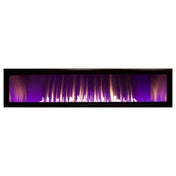
For a shallower wall, the Modern Flames Landscape Pro Slim recesses into a standard 2x6. The rest are in linear electric fireplaces.
Split the Bar From the Dining Room Without a Wall

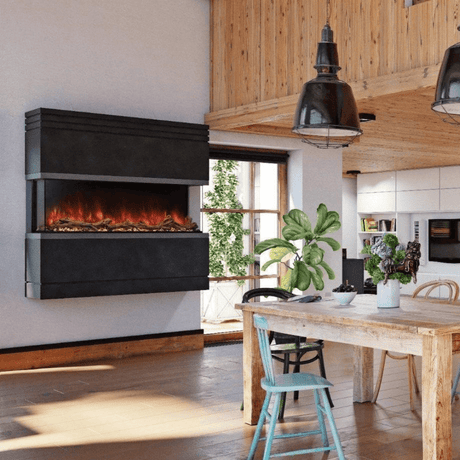
Most hospitality rooms need zoning: a bar that stays loud, a dining area that stays civil, and no solid partition between them because the room is already tight. A see-through or three-sided fireplace set into a half-wall does both jobs at once, giving each side a focal point and a sightline through.
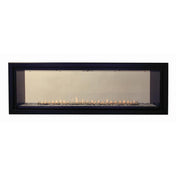
The Landscape Pro Multi is the workhorse here, and the SimpliFire Scion Trinity is the alternative when the partition is shorter. Browse 3-sided electric fireplaces and see-through fireplaces for the full set.
Bar Rescue Did Exactly This, With One of Ours
When Bar Rescue turned Linda Lou's in Layton, Utah into Purser's Bar, Jon Taffer had the same problem every long narrow room has: one undifferentiated space that felt like a corridor. He split it into two with a Dimplex Opti-Myst water vapor fireplace we supplied, set into a dividing wall so it could be enjoyed from both sides. It aired in Season 7, Episode 3.
Water vapor was the right call for a bar specifically, and for the reason covered above: the flame is mist and light, so it is cool to the touch in a room where people stand shoulder to shoulder holding drinks. The Opti-Myst cassette range is what makes this buildable, since the cassette drops into a wall your contractor frames rather than arriving as a finished box, and it takes a plumbing connection so nobody behind the bar is topping up a water tank mid-service.
Lobbies and Lounges, Where People Stand Close

A hotel lobby, a waiting area or a private dining room changes the calculation, because guests stand within a few feet of the fireplace instead of viewing it across a room. At that distance the difference between a recorded flame and a light effect is obvious to anyone.
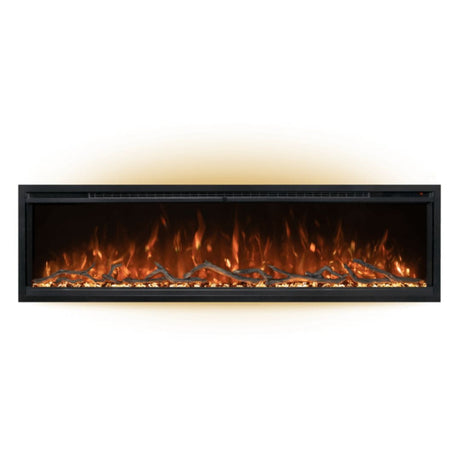
This is where the realism premium is worth paying. The Modern Flames Orion Slim plays a recording of an actual fire on a screen rather than synthesizing one with light, and it holds up to close inspection in a way an LED unit does not. For a more traditional room, the Amantii Traditional insert gives you a conventional firebox shape in a range of widths.
Where the fireplace is a backdrop rather than the centerpiece, buy on value instead. Not every fireplace in a venue is the one guests walk up to. A unit at the end of a corridor, behind a host stand, or high on a wall above the banquettes is read from across the room, and at that distance an LED flame does the job perfectly well for a good deal less money.
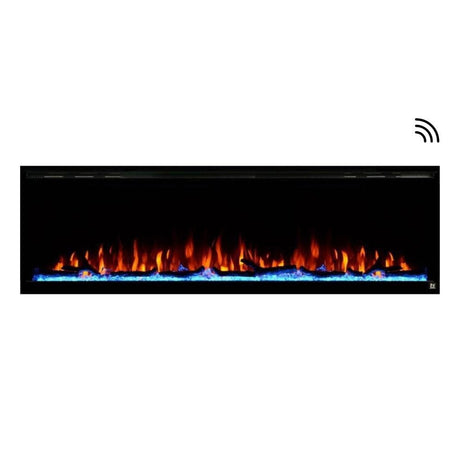
The Dynasty Tempo is the one we reach for most here, with a wide color palette that suits a room with a strong scheme of its own. The Touchstone Sideline Elite Pro is the other, and it comes in more widths than almost anything else we carry, which matters when a build-out needs four fireplaces at three different sizes.
The Terrace, and an Honest Word About Heat

An outdoor fireplace does something specific for a patio: it gives the space an anchor and a reason to book a table outside in October. Our outdoor-rated units are in outdoor fireplaces.

Connecting the Dining Room to the Terrace
The best version of this is a fireplace set into the exterior wall itself, showing flame to the dining room on one side and the terrace on the other. It makes the terrace read as part of the restaurant rather than as an overflow area, and it sells the outside tables from indoors on a cold night.
The Superior DRT63ST is the one to specify, and the reason is the venting. It is direct vent, which means sealed combustion: the firebox draws its air from outside and exhausts outside, with the room on neither side sharing air with the fire. That is what makes it safe to pass through an exterior wall. A vent-free unit cannot do this job, because it takes its combustion air from the room it sits in, and here there is no single room it sits in.
Being gas, it also radiates real heat to the terrace side, which no electric fireplace will.
There is no electric equivalent for this job, and it is worth understanding why. Plenty of electric fireplaces are sold as indoor/outdoor, but that means the unit may be installed indoors or outdoors, not that one unit can bridge the two. Amantii, for example, permits outdoor installation only in an area protected from direct water, with a rain overhang built to half the height of the appliance on the front and both sides. That is a specification for a covered patio, not for a hole through an exterior wall.
A pass-through also needs two opposite faces, which is a see-through unit. Most indoor/outdoor electric models are three-sided, meaning a front and two ends, which is the shape for a peninsula or a half-wall inside one space. If the fireplace has to be visible from a dining room on one side and a terrace on the other, specify direct vent gas. Use electric on one side or the other, not through the wall.
What it will not do is keep the far tables warm. An electric fireplace heats by fan-forced convection, which warms air, and outdoors that air rises and blows away within seconds. A gas fireplace radiates, so the guests directly in front of it feel it, and everyone else does not.
Treat the fireplace as the focal point and heat as a separate line item. Overhead infrared patio heaters warm people rather than air, which is what actually keeps a terrace sellable once the temperature drops. Operators who buy a fireplace expecting it to do both end up with a beautiful patio nobody sits on.
When Gas Is Still the Right Answer
Gas earns its place when the fireplace has to be genuinely warm, when the room wants a real flame that a guest can tell is real, or when the building already has the line and a venting route.
Indoors, Specify Direct Vent. Not Vent-Free.
This is the one rule we will not flex on for a commercial room.
A vent-free appliance takes its combustion air from the room and puts everything it produces back into that room. In a house, with a few people and a door they can open, that is a designed and accepted trade. In a dining room with a hundred guests, a sealed building envelope and a kitchen already competing for the same air, it is the wrong appliance, and many jurisdictions restrict or prohibit it in commercial occupancies for exactly that reason.
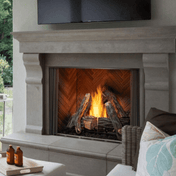
A direct vent appliance is sealed. It draws combustion air from outside through one pipe and exhausts outside through another, and the glass front separates the two systems from the room entirely. Nothing from the fire enters the space guests are sitting in. That is what belongs indoors in a commercial build, and the vent can run horizontally out a side wall rather than up through the roof, so it does not force a chase through the floors above.
The Superior DRL2000 linear and the Empire Loft are the two we specify most into hospitality work, and the Majestic Quartz is the value option. The full range is in direct vent gas fireplaces.
Outdoors, Vent-Free Is the Right Tool

Outside, the objection disappears, because the combustion products go into open air rather than into a room full of people. That is why almost every outdoor gas fireplace on the market is vent-free, and why it is the sensible specification for a terrace: no flue, no chase, and it can be framed into a terrace wall by the same contractor building the rest of it.
Start from outdoor gas fireplaces. Confirm the installation with your inspector either way, since local rules on gas appliances in public spaces vary more than anything else in this guide.
Build It Yourself With a Gas Burner

You are not limited to the fireboxes on the shelf. A gas burner is the working part of any outdoor fireplace, and specifying one on its own lets your contractor build the enclosure to suit the space rather than designing the space around a product.
Two shapes cover most commercial work. A linear trough burner set into a low dividing wall gives you a long ribbon of flame that separates the terrace from a walkway or the parking lot while staying open overhead. A longer run along the back of a banquette does the same as a feature wall. The Top Fires Linear Bullet burner and the Empire Carol Rose stainless linear burner are the two we supply most for this, and the range is in gas burners.
A custom build is also usually the cheaper route to a very long fire feature, because you are buying a burner and some masonry rather than a fireproof cabinet.
Pair It With Heaters, or the Patio Still Closes
This is what actually keeps a terrace earning through the winter, and it is the part most operators get wrong by trying to make one product do both jobs.
A fireplace radiates forward. The guests facing it are warm and everyone else is not, which on a full terrace is most of your covers. Overhead infrared patio heaters mounted above the seating cover the tables the fire cannot reach, they take no floor space away from covers, and they can be zoned to match how you seat the room.
Fireplace for the atmosphere, heaters for the comfort. Specify both and the patio sells all year. Specify only the fireplace and you have a beautiful terrace that empties in October.
Specify These Six Things Before You Order
- Wall depth and framing. A recessed unit has to fit inside the wall. A 2x4 gives roughly 3.5 inches and a 2x6 roughly 5.5, and many commercial-scale fireboxes need more than either.
- Electrical. Larger linear units hardwire and frequently want a dedicated circuit. Give the electrician model numbers, not descriptions, and do it before the walls close.
- Control. Decide who turns it on. A wall switch a server can reach, an app, or a timer tied to opening hours all behave differently in practice, and a fireplace nobody can find the switch for stays off.
- Clearance to combustibles and to guests. Commercial furniture layouts move. Check the manufacturer clearance against where tables will actually end up, not the drawing.
- Service access. Confirm how the unit is removed before it is built in.
- Quantity and lead time. Multi-unit orders are the norm in hospitality and stock moves. Confirm both before the schedule depends on them.
Tell us the room, the wall you have and the opening date, and we will spec it and confirm stock across the quantity you need. Start from built-in fireplaces if you would rather see the range first.