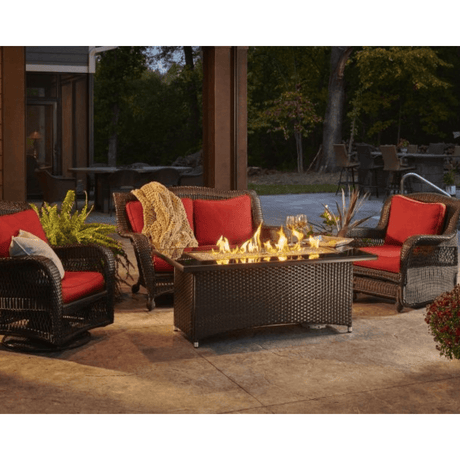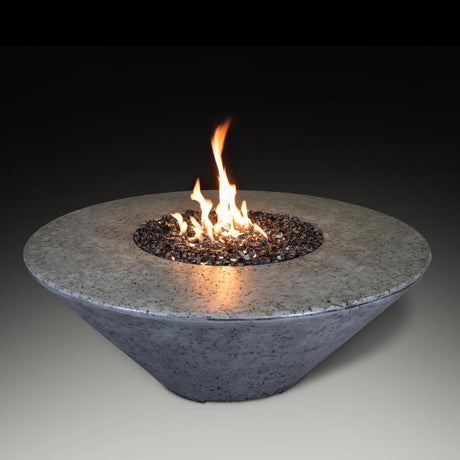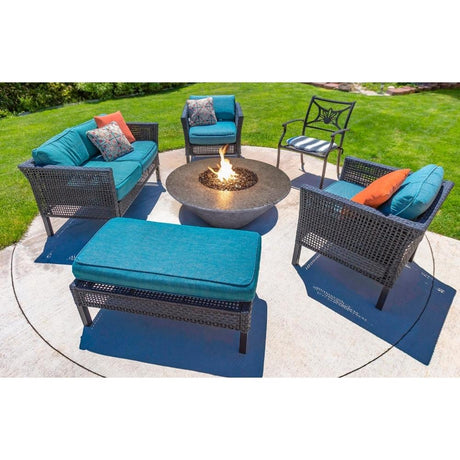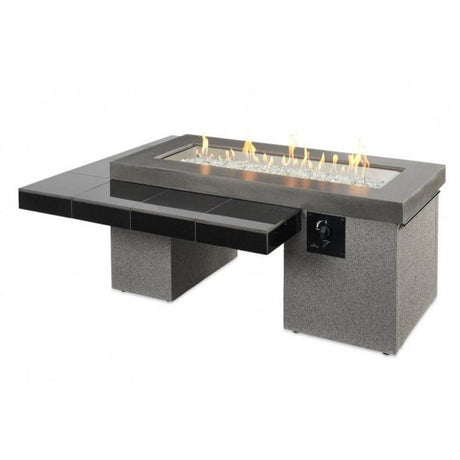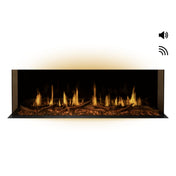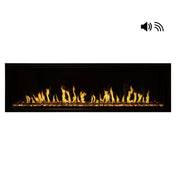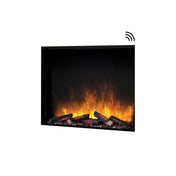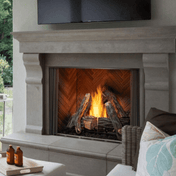

A fire pit table is the piece of outdoor furniture people gather around without being asked. It works because it does two jobs at once: it is a table when the burner is off, and the reason everyone stays outside when it is on.
The catalog is large and most of it looks good in a photograph, which is exactly what makes it hard to choose. Four things actually decide whether a table suits your patio: height, fuel, shape and material. Get those right and the finish is the easy part.
Start With Height, Because It Decides How People Use It
Height is the one choice that changes the behavior of the whole space, and it is the one most people skip past. The same table at three different heights produces three different evenings.
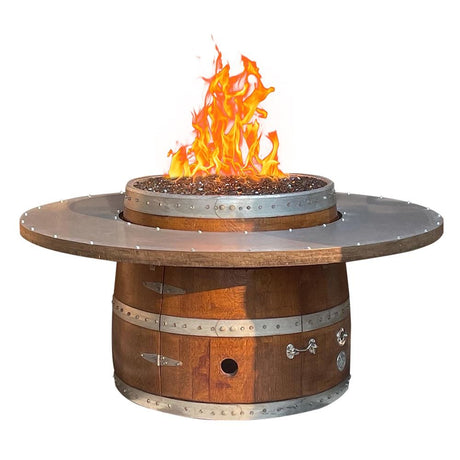
Wine Barrel Dude offers the same reclaimed barrel at all three heights, which is a clean way to test the idea: hold the footprint and the material constant, change only the height, and the evening changes with it.
Coffee Height, for Lounging

Coffee height sits at roughly the same level as an indoor coffee table, so it pairs with deep seating, sofas and low lounge chairs. People sink back and stay a while. It is the most relaxed of the three and the least practical for eating. Browse the fire pit coffee tables.
This is also our single best-selling fire pit table, which tracks: most people are furnishing a lounge area rather than a dining one.
Dining Height, for Actually Eating Outside

Dining height matches a standard outdoor dining table, so ordinary patio chairs work and plates sit at a comfortable level. The flame runs down the middle while people eat around it.
Choose this one if the fire pit is replacing your dining table rather than sitting alongside it. It is the most versatile of the three, and the one that gets used on weeknights rather than just on occasions. See the fire pit dining tables.
Bar Height, for Standing and Circulating

Bar height keeps people on their feet and moving, which is why it suits parties, tasting rooms and restaurant patios better than a family dinner. Nobody settles in, and that is the point. It also reads as taller and more sculptural from across a yard.
The short version: pick coffee height if you want people to sink in, dining height if you want them to eat, bar height if you want them mingling.
Propane or Natural Gas
This decision is usually made for you by the property, not by preference.
Natural gas connects to a permanent line, so it never runs out and there is no tank to hide. That makes it the right answer for a table that will live in one spot and get used constantly, and the usual choice for restaurants and hotels where swapping a cylinder mid-service is not an option. The cost is the installation: you need a line run to the spot, by a licensed professional.
Propane runs from a cylinder, usually concealed in the base behind an access door. No gas line means no trenching and no permanent commitment, so it suits a patio with no existing service, a rental, or anyone who might rearrange the space later. The tradeoff is remembering to refill it.
Most tables are ordered in one configuration or the other rather than switched later, so decide before you order. If you want the full comparison including running costs and BTU sizing, that is covered in our fire pit buying guide.
If you already know which fuel you need, the propane fire pit tables are grouped separately.
Shape Follows the Seating You Already Own
Shape is not really an aesthetic decision. It is a question of what your furniture is doing, and the wrong shape leaves people either shouting across a gap or crowded onto one side.
Round, for Conversation

A round table has no head and no ends, so everyone sits an equal distance from the fire and from each other. It is the best shape for conversation and the most forgiving in an open yard where seating is not fixed. See all round fire pit tables.
Square, for Small and Symmetrical Patios

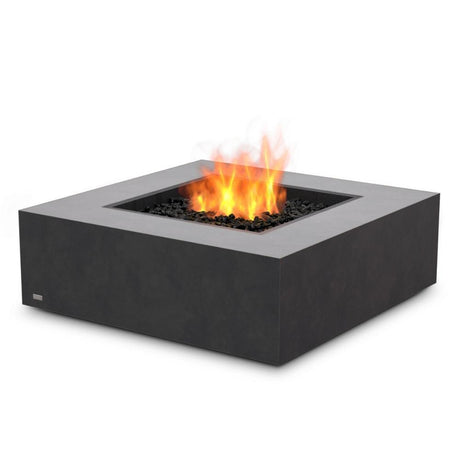
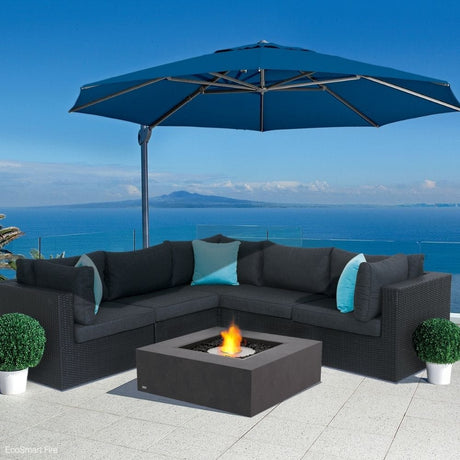
A square suits four chairs and a square patio, and it tucks into a corner more neatly than a round of the same capacity. It is the efficient choice when floor space is tight.
Linear, for Sofas and Sectionals

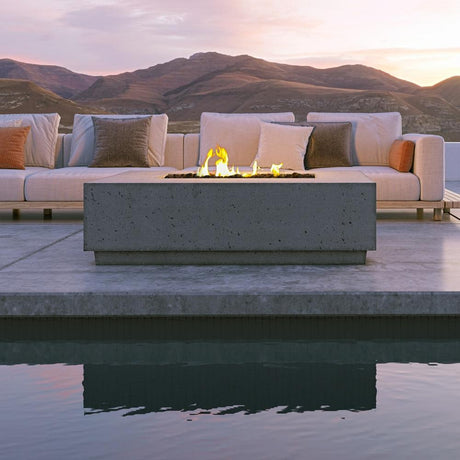
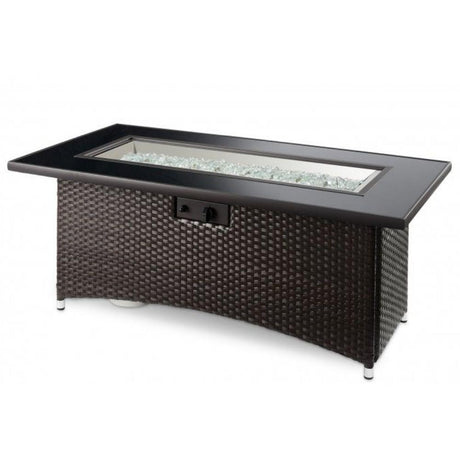
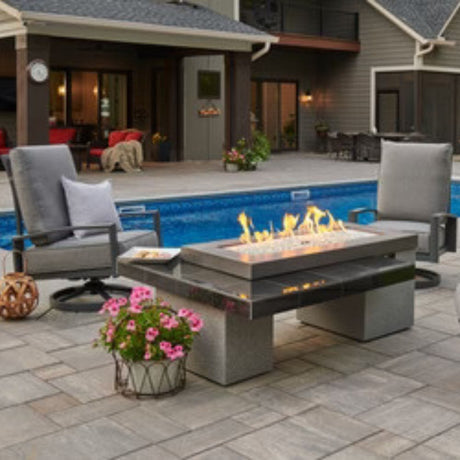
A long, narrow burner follows the line of a sectional instead of fighting it, and it gives you a run of flame rather than a single point. This is the shape that photographs best and the one to choose if your seating is already arranged along a wall or a railing.
Dining Table, When It Has to Seat Everyone

A full dining table with the burner set into the middle gives you flame down the center and real table surface on both sides. It is the format to choose when the fire feature has to earn its footprint as a dining table first. Compare the fire pit dining tables.
Size, Which Is Not the Same as Shape
Height, fuel, shape and material are the four that decide the character of the table. Size decides whether it fits, and it is the one people get wrong most often because they measure the empty patio rather than the patio with chairs pulled out.
A table that is too small disappears once seating is around it and stops being a focal point. One that is too large eats the walking space and pushes people further from the flame, which defeats the purpose. Leave room for someone to get in and out of a chair behind the seating, not just for the table itself.
If your space is tight, a balcony, a small deck or a courtyard, start with the small fire pit tables. At the other end, the large fire pit tables are the longest formats we carry, built to seat a full group rather than a couple of chairs, and the fire pit dining tables are the subset of those built to seat a meal.
Materials, and What Each One Actually Does Outside
Material decides how the table ages far more than how it looks on day one. Everything here is built for outdoors, but they weather differently.
Concrete and GFRC
Most tables in this category are one of two things, and they are not the same product even when they look alike from across a patio.
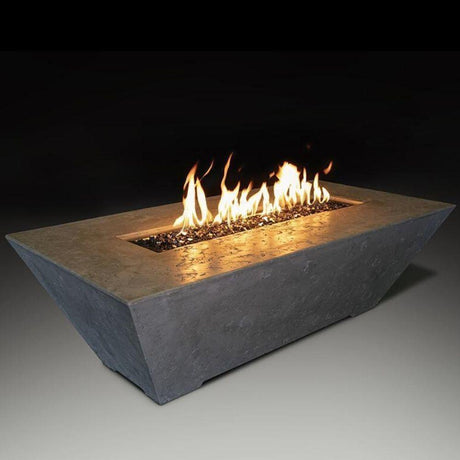
Cast concrete is a solid pour. It is heavy, dense and completely still in wind, and it has a depth to the surface that a thin panel cannot fake. Stonelum builds this way. The tradeoff is the weight, which is worth checking before you put one on a balcony or a roof deck.

GFRC, glass fiber reinforced concrete, mixes fine glass fibers into the pour so a panel can be thin and still strong. You get the look and the quiet of concrete at a fraction of the weight, and a crisper edge than a solid cast piece will hold.
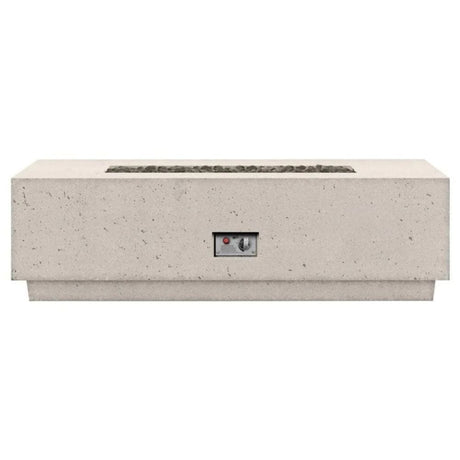
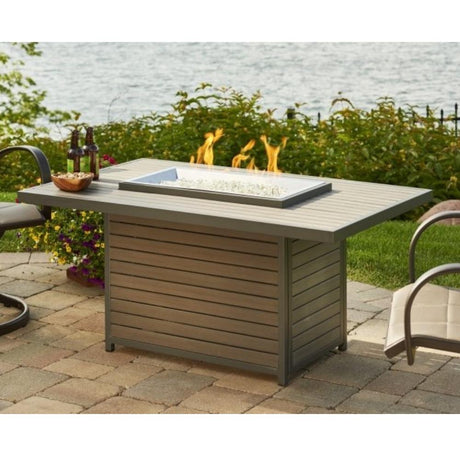
The reason GFRC dominates the category is that it is cast in a mold, so the surface is a choice rather than a given. It can be finished smooth and modern, given a fine sandblasted texture, or cast to reproduce timber grain closely enough that people touch it to check. The table below is the last of those: concrete cast as wood, with none of the sealing and refinishing a real timber top needs outdoors.

Neither is a compromise. Cast concrete is the more substantial piece; GFRC is the more versatile one, and it is where you go if you want a specific look.
Steel

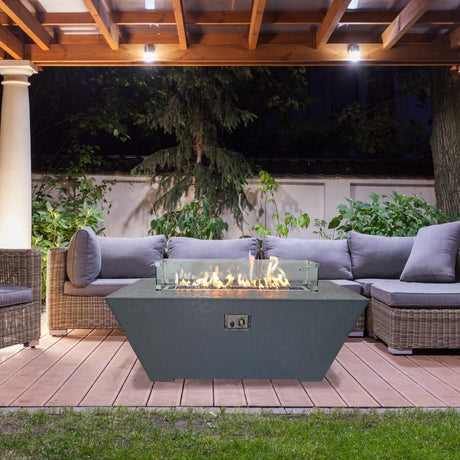
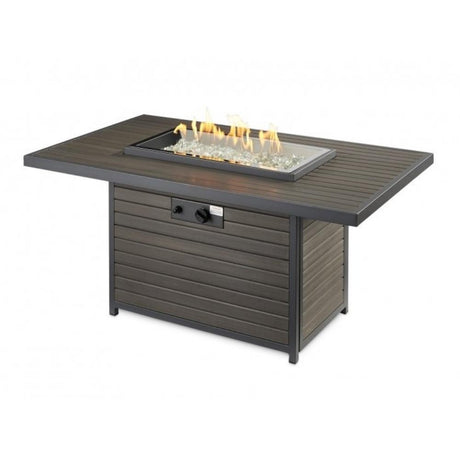
Steel gives you the thinnest profile of any material here, so a steel table reads as lighter and more sculptural than a concrete one of the same size. It comes in three forms and they age in completely different directions. Powder-coated steel, like the table above, is finished in a baked-on color that stays put and asks nothing of you. Carbon steel develops a rust patina over time by design, which some people want and some do not, so decide which camp you are in before ordering. Stainless resists corrosion instead of patinating, which is why it turns up on coastal and commercial projects.
Whatever the body is made from, the burner should be stainless steel. Anything else rusts.
If Nothing Off the Shelf Fits, We Build It
Sometimes the space dictates a size, a shape or a finish that no manufacturer stocks. A courtyard with an awkward footprint, a restaurant that needs the table to match its millwork, a hotel that wants one piece nobody else has.
We make custom fire pits and burners in the USA through a network of craftsmen, and the design team works through the dimensions, finish, fuel and ignition with you. It is a real route rather than a last resort, and it is usually the answer for commercial spaces where the fire feature has to fit a design that already exists.
A Few Things Worth Knowing Before You Order
None of these are dealbreakers, but they all surprise someone every week.
- Decorative media is required and usually sold separately. A gas burner needs fire glass or lava rock over it to spread the flame and shield the burner. How much depends on the size of the table, so order it at the same time.
- A propane tank has to live somewhere. Most tables hide one in the base behind an access door, but not all of them, and not every size fits every cylinder.
- Check the clearances, not just the footprint. A table that fits the open floor space can still sit too close to siding, a railing or an overhead structure.
- A burner cover turns it back into a table. If the surface matters to you during the day, confirm one is available for the model you like.
- Wind guards are model-specific. On an exposed patio they make a real difference to how the flame behaves, but only use one approved for that table.
Where to Start Looking
If you know the height and shape you need, the fastest route is to browse the full range and filter from there.
The full outdoor range is in outdoor fire pit tables.
Still deciding between a table and another format? Compare the wider fire pit tables, fire bowls and fire pits ranges.
If you would rather talk it through, tell us the patio dimensions, your fuel supply and how you use the space, and we will narrow it down for you. Call 866-713-2399 or email support@modernblaze.com.
Pin this article:

Keep Reading
- The Ultimate Fire Pit Buying Guide, for fuel comparisons, BTU sizing, ignition systems and safety
- Best Fire Pits to Buy in 2026, for specific model recommendations by category
- 24 Amazing Fire Pit Ideas, for layout and design inspiration