
The fastest way to decorate a fireplace for the holidays is to stop decorating it four times. Build one neutral base in early fall, leave it up through New Year, and swap only the accent layer as each occasion arrives. Fifteen minutes per changeover instead of an afternoon, and the mantel looks deliberate every time rather than assembled in a hurry.
Here is how that base works, what to change for each holiday, and the clearance rules that matter once the fireplace is actually running.

Build the base once
The base is everything that reads as seasonal without belonging to a specific holiday. Three things do most of the work.
A garland along the mantel shelf. Choose one in a mixed evergreen or a muted eucalyptus rather than a bright Christmas green, and it carries September through December without looking out of place in October. Let it drape past the corners by a few inches on each side so it frames the firebox instead of sitting on top of it like a hat.
An anchor on one side. A tall lantern, a stack of books, a leaning frame. It stops the shelf reading as a row of evenly spaced objects, and it never has to change.
Texture in a neutral color. Woven baskets, a wool throw over the hearth, unglazed pottery. Cream, oatmeal, and warm gray all sit under orange in October and under red in December without fighting either.
Everything else is the accent layer, and the accent layer is small on purpose. Roughly five or six objects that you box up together and swap as a set.
Fall fireplace decor
Fall is the longest stretch, from early September until the Halloween decorations go up, so this is the layer that has to hold up to being looked at for two months.

Work in three tones rather than the full autumn palette. Rust, dried mustard, and a deep brown will read as fall without the orange-and-yellow effect that tips into cartoonish. Dried elements do the heavy lifting here: wheat, bittersweet branches, pampas, seed pods. They photograph well, they last the whole season, and they are the cheapest part of the whole arrangement.
Vary the height across the shelf. The most common mistake is lining objects up at one level, which reads as a row of things rather than an arrangement. Group in odd numbers, put the tallest piece a third of the way in rather than dead center, and leave real gaps. Empty shelf is part of the design.
Halloween fireplace decor
Halloween is the shortest layer and the one most worth restraining. Two weeks, and it goes over a base you already like.

The version that works on a mantel is atmospheric rather than novelty: black taper candles at mixed heights, matte black or bone-white vessels, dark foliage worked into the garland you already have. Add one thing with a sense of humor, a single skull or a raven, and let it be the only literal object. A whole row of them turns the mantel into a store display.
Large pumpkins sit better on the hearth and the floor than on the shelf, where they eat the depth you have and crowd the firebox. Stick to white, gray-green, and deep burgundy varieties if you want them to still look right in the first week of November.
Thanksgiving mantel decor
Thanksgiving is the easiest change of the four. Pull the black out, put the warm metals back, and the fall base is already most of the way there.

Brass and antique gold in candlesticks and small vessels are what shift the mood from October to November. Add fresh greenery to the dried arrangement rather than replacing it, since the contrast between dried and fresh is what keeps it from looking tired by the time guests arrive.
One practical note if the fireplace is in the dining room: keep the mantel arrangement low and wide on the day. Anything tall competes with the table and blocks sightlines across the room.
Christmas mantel decor
This is the layer people actually plan for, and the base pays off here more than anywhere. The evergreen is already up, so Christmas is a matter of adding light, weight, and one color.
Light first. Warm white string lights woven into the back of the garland, not draped across the front, so you see the glow and not the wire. Battery packs with a timer are worth it on a mantel, because there is rarely an outlet where you need one and a cord running down the face of the fireplace undoes the whole arrangement.

Then weight. Christmas is the one time of year the mantel can carry more than it usually does. Deepen the garland, add pinecones and dried orange slices into it, and let it fall further down the sides. An arrangement that looks generous in December would look cluttered in October, which is exactly why it is the last layer rather than the base.
Then one color. Red, or brass, or a single deep green. Pick one and repeat it at least three times across the mantel so it reads as intentional. Two colors plus metallics is where most mantels start looking busy.

A small collection beats a lot of separate objects. A row of ceramic houses, a set of matching candlesticks, a handful of brass bells: one repeated shape reads as deliberate where the same number of unrelated pieces reads as clutter. It also gives you the height variation the shelf needs without adding another color.
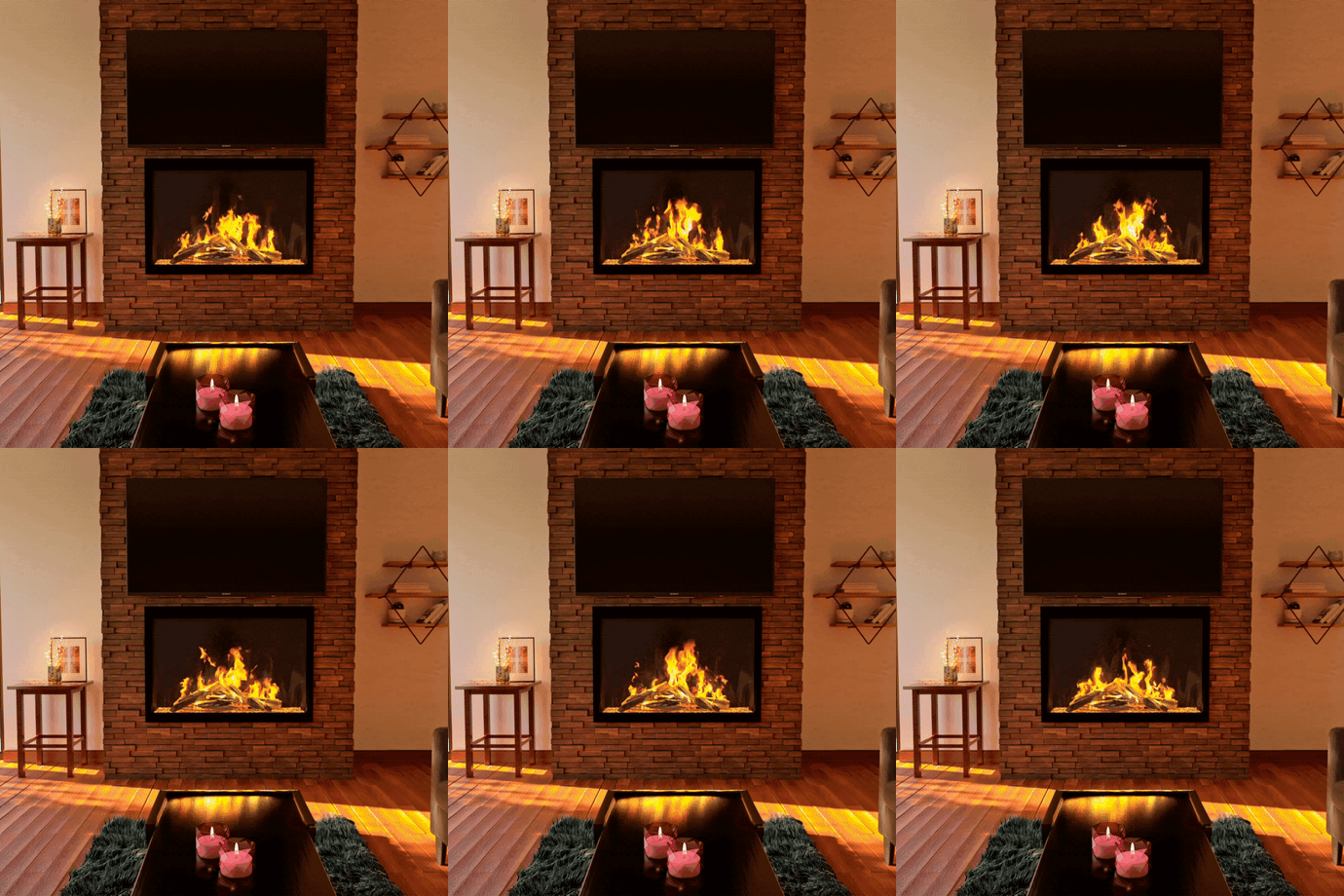
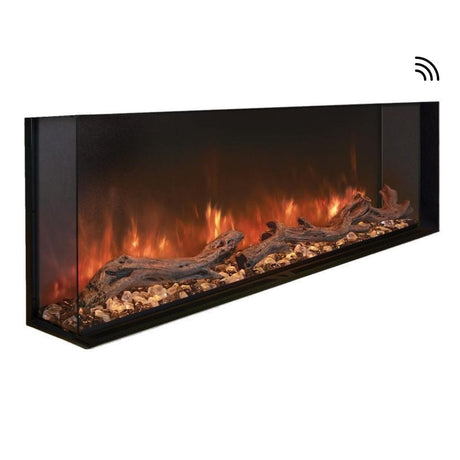
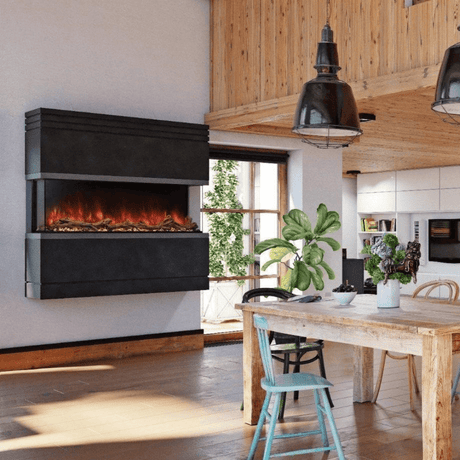
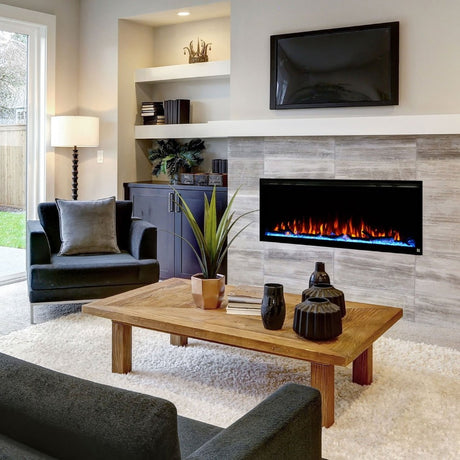
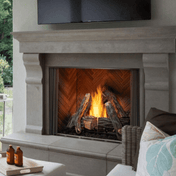
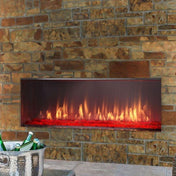
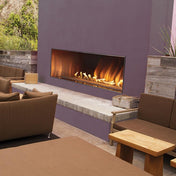
If the fireplace runs while all of that is up, the arrangement above is worth studying for a second reason. That is an electric unit, which is why the greenery can sit directly along the shelf and the stockings can hang where they do. On a gas or wood fireplace the same mantel would need the clearances covered below.
Stockings are the part worth thinking about hardest, and they are covered in the clearance section below, because they hang directly in front of the firebox.
What not to put on a working fireplace
This is the part most decorating guides skip, and it is the part that matters once you light the thing.

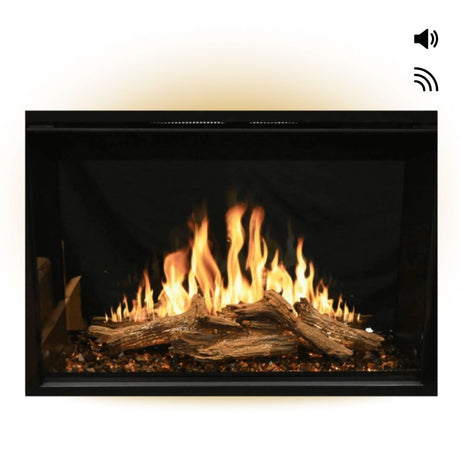
On a gas or wood fireplace, treat the manual as the rule. Every unit specifies a minimum clearance to combustibles above and beside the opening, and it is printed in the installation manual for that model. Garland, stockings, dried arrangements, and paper decorations are all combustible. The clearance was calculated for a bare mantel, and it does not account for something flammable hanging below the shelf line.
Dried material is the risk people underestimate. Wheat, pampas, dried orange slices, and a garland that has been up since September are all considerably more flammable in December than the day you put them up. If the firebox is in use, keep dried elements on the ends of the mantel rather than the center, and check them as the season goes on.
Stockings only go up when the fireplace is not running. Hanging fabric directly in front of a working firebox is the single most common holiday hazard involving a fireplace. If you want them up all December on a fireplace you actually use, mount them on a nearby wall or a stocking stand on the hearth instead of the mantel itself.
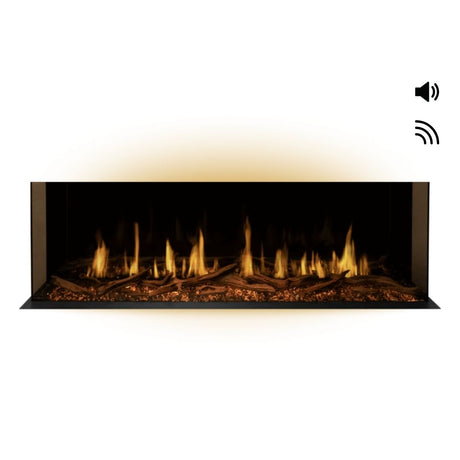
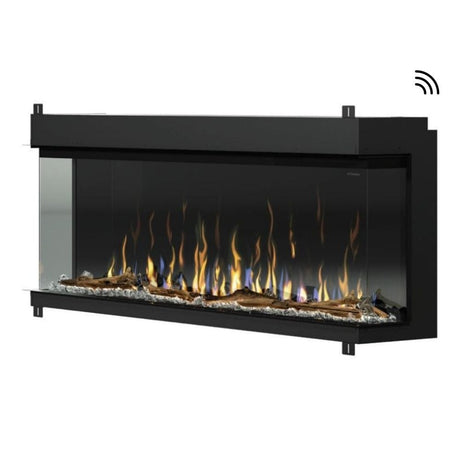
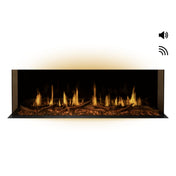
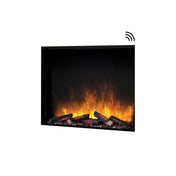
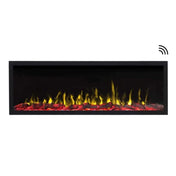
On an electric fireplace, the glass is not the issue. The heater vent is. The heat leaves through a vent, usually along the top edge or underneath, and that vent needs to stay clear. A garland that drapes over the top of a wall-mounted unit can sit directly across the outlet. Find the vent on your model, keep decorations clear of it, and the rest of the arrangement is unrestricted. This is the real advantage of an electric fireplace for a heavily decorated room, not that the unit is cool to the touch.
Candles are worth one line: a lit candle on a mantel above a running fireplace sits in the rising heat, burns unevenly, and can slump. Flameless is not a compromise here, it is the version that still looks right on December 26.
When there is no mantel
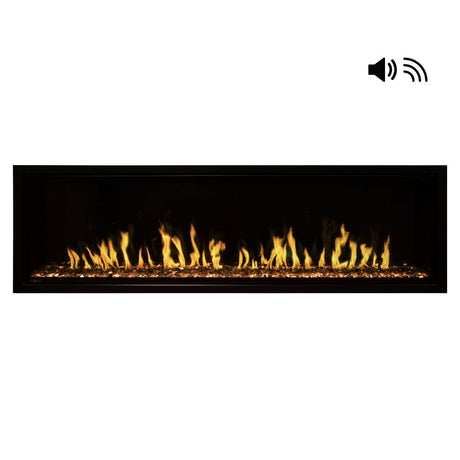
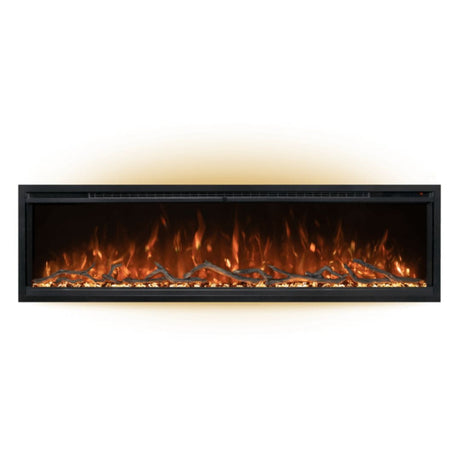
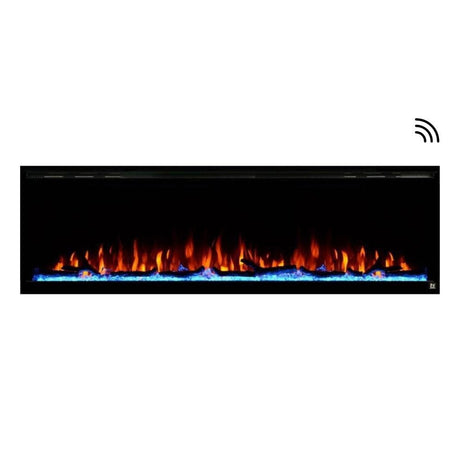
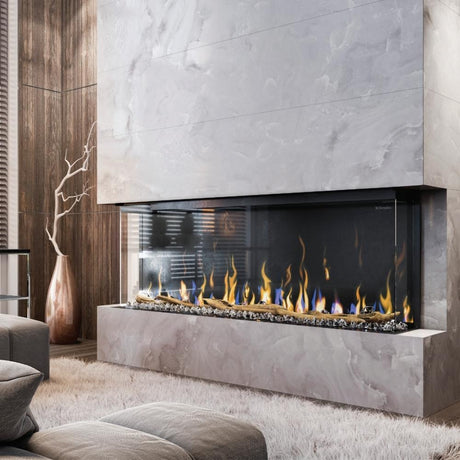
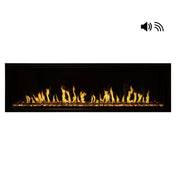
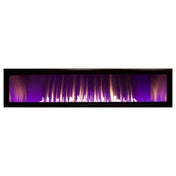
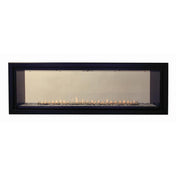
Linear and wall-mounted fireplaces mostly do not have a shelf, and a floating mantel gives you only a few inches of depth. Decorating still works, it just moves off the wall.

Build on the hearth and the floor instead. A pair of tall lanterns flanking the opening, a basket of greenery on one side, a low arrangement on the floor at the corner. The fireplace stays clean and the seasonal layer sits around it, which suits a linear unit far better than trying to balance objects on a ledge that was never meant to hold them.
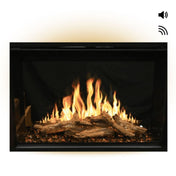
If you want a shelf specifically so you can decorate it, that is a real reason to choose one. A Touchstone Sideline Elite with a transitional mantel gives you a genuine shelf with depth to work on, and the Modern Flames Redstone with a rustic mantel does the same in a more traditional room. Both are worth comparing against the shelf-free mantels you can add to a wall you already have.
The changeover, in practice
Keep the accent layer for each holiday in its own labeled box, stored with the base pieces rather than in the attic. Changing over is then genuinely fifteen minutes: take one set off, put the next on, and the base never moves.
The one thing worth photographing is the base arrangement once you are happy with it, in daylight, from where you usually sit. Rebuilding it next September from a photo takes a fraction of the time it took to work out the first time.
Planning the fireplace itself rather than what goes on it? Browse our fireplaces and we will help you match one to the room.